
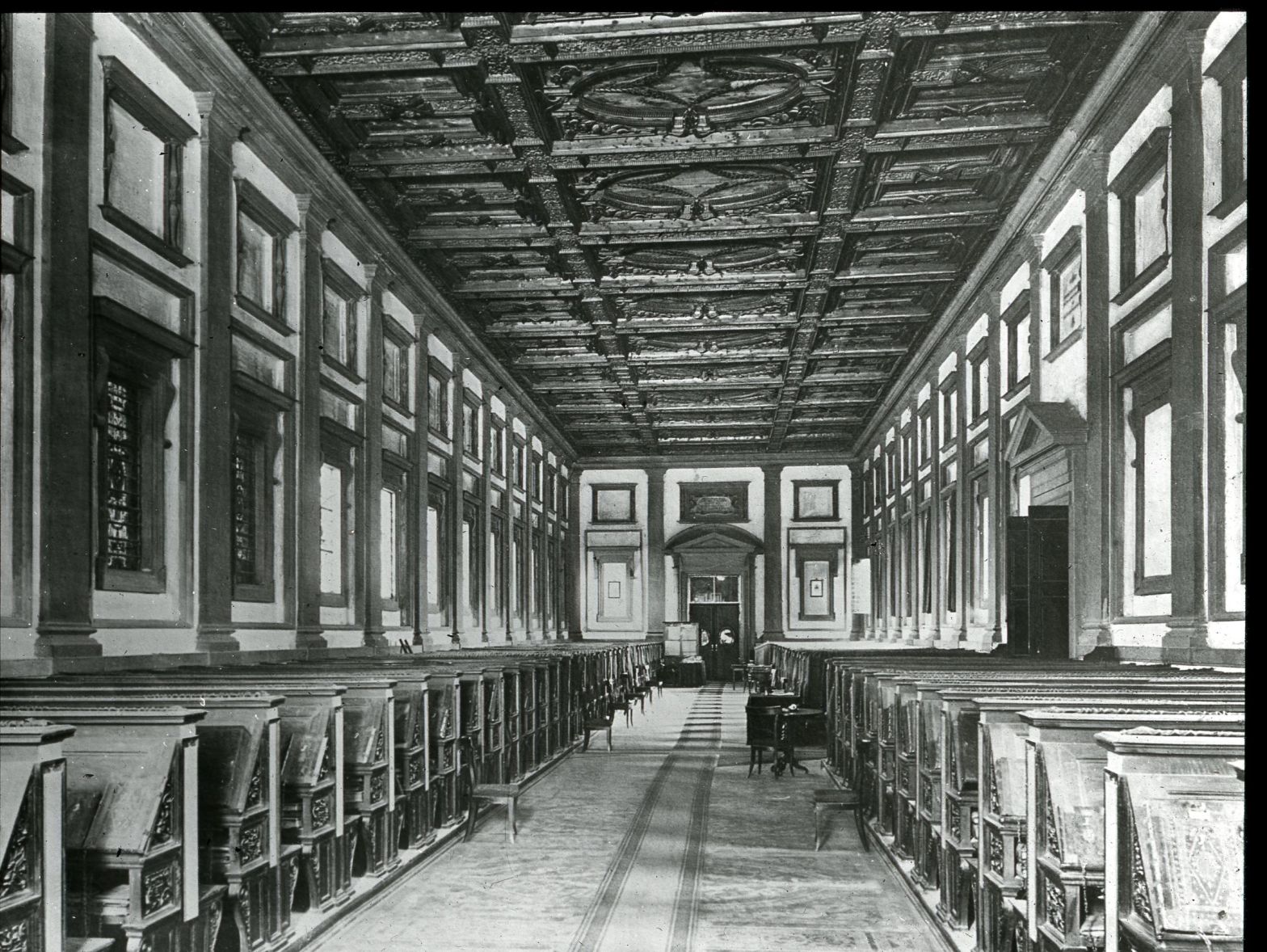
At the end of last year, I published a year-in-review of my reading on my website. It was a useful way to reflect on the previous year and identify which books were most important to me. In 2025, I read approximately 100 books, so narrowing them down was difficult. My reading broadly fell into three categories (Georgia/Southern history, the Progressive Era, and book history), with some exceptions. My reading was almost entirely nonfiction in 2025.
This year, I have split my year-in-review into three sections. In the first, I selected ten books that were particularly insightful, prompted new ways of thinking, or inspired research projects. The next section highlights books by my professors, friends, or family. I thought this would be a good way to highlight some fascinating books by individuals that I know. Finally, I have a few academic journal articles. I chose five last year, so I decided to stick with the same number this year.
As always, I have a page on my website with a running list of the books and articles I have read. I am slightly behind on updating descriptions, especially of articles, but the titles can all be found at https://ajbramlett.com/books/.
Books
Most of my reading about the Civil War has focused on Georgia and the western theater. The first book I read in 2025, Longstreet: The Confederate General Who Defied the South by Elizabeth R. Varon, was a notable exception; I was primarily interested in James Longstreet’s postwar career and second wife. After serving as Lee’s right-hand man, Longstreet became a supporter of Reconstruction and repudiated the Lost Cause of his former comrades. He led an integrated police force in New Orleans and later served as a leader of Republicans in the postwar South. Varon has sufficient information about his Civil War career to satisfy a Civil War enthusiast, but is primarily interested in his comparatively unexplored life after the war. Longstreet’s second wife, Helen, had a fascinating career in her own right, which is not covered in depth here. Her life is a topic I would like to explore further.
One of my largest 2025 research projects was on Cobb County’s efforts to build a professional sports stadium in the 1950s and ‘60s. Two books influenced the project, with the first being Loserville: How Professional Sports Remade Atlanta – and Atlanta Remade Professional Sports by Clayton Trutor. When I first ran across the Cobb County story, I knew that Loserville would be essential reading, but I was a bit hesitant because I am not actually a huge sports fan. Nevertheless, Loserville was a very accessible read. The book is not primarily about sports, but rather about the civic leaders and boosters who brought professional sports to Atlanta and used them as a marketing tool. This framework was very useful in understanding my own research.
The second book that influenced the stadium project was White Flight: Atlanta and the Making of Modern Conservatism by Kevin M. Kruse. I read this book twice this year: once for research and once for class. It offers a fascinating look at how desegregation appeared and actually worked in Atlanta, and why Atlanta’s Civil Rights story is drastically different from that of other Southern cities such as Little Rock or Birmingham. The story of white flight involves both the city of Atlanta itself and its suburbs. Kruse focuses on why Atlantans left the city, which I think leaves open an interesting question: what drew them to specific suburbs?
Switching gears completely, one short but insightful read was The War of 1898: The United States and Cuba in History and Historiography by Louis A. Pérez Jr. This slim volume looks at how the Spanish-American War has been remembered in the United States and in Cuba, and the vast chasm between the two views. The “Splendid Little War” in American historiography is a divisive, critical subject in Cuban history. Pérez also examines how American views of the war’s causes have evolved over time, shifting from economic to social to political interpretations of the events of 1898. Overall, the book is a great case study of how the same events can be interpreted and reinterpreted in different ways.
Early in 2025, I read all the books I could find on the 1912 election. It is one of the most interesting and important in American history. Seeking a third term, Theodore Roosevelt split his party into two rival groups (Republicans and Bull Moose), drawing votes away from incumbent William Howard Taft and allowing Woodrow Wilson to win the White House. Among the books I read about 1912 and the Bull Mooses, I found Theodore Roosevelt, the Progressive Party, and the Transformation of American Democracy by Sidney M. Milkis the most insightful. It focuses solely on Roosevelt’s party and examines what drew people to the Bull Mooses, the intraparty conflicts that emerged, and how the party was built from the ground up.[1]
I have an affinity for Roosevelt, which explains why I have read much more about his life than other presidents. On the other side of the same coin is Woodrow Wilson, whom I strongly dislike but am equally drawn to. Christopher Cox’s new Wilson biography, Woodrow Wilson: The Light Withdrawn, reinforced this view. While a great deal of scholarly criticism has been lobbed at Wilson because of his racial views, Cox focuses on gender. While we remember Wilson as being president when the Nineteenth Amendment was passed, Cox reveals that Wilson was deeply misogynistic and an opponent of women’s suffrage. The focus on Wilson’s domestic policies, rather than his foreign relations, shows how, without the diversion of World War I, Wilson would be even more criticized today.
When I registered for a Shakespeare course at KSU, I decided to read a little bit ahead of time to prepare. The book I read was Contested Will: Who Wrote Shakespeare? by James Shapiro, a fascinating look at the Shakespeare authorship controversy. There is a popular conspiracy theory that claims Shakespeare’s works were not written by William Shakespeare, and there has been extensive speculation about the real author. Shapiro is firmly of the opinion that Shakespeare is by Shakespeare, but is interested in why people believe otherwise. The book examines several major theories and offers insight into what conspiracy theories about Shakespeare reveal about class, art, and public and scholarly perceptions of the Bard himself.
Several years ago, I ran across a reference in a book to the Fenians, a group of Irish ex-Union soldiers who tried to invade Canada just after the Civil War. This struck me as odd, and when I have been at bookstores, I have tried to keep an eye out for books on the topic. At long last, I found one: When the Irish Invaded Canada: The Incredible True Story of the Civil War Veterans Who Fought for Ireland’s Freedom by Christopher Klein. The book examines the Irish revolutionaries who emigrated to the United States after the potato famine and why they believed an invasion of Canada was the appropriate means to liberate Ireland. Their attempts appear very misguided but are oddly endearing in their earnestness.
A very different look at post-Civil War America is offered in T. J. Stiles’s Jesse James: The Last Rebel of the Civil War. I have read two of Stiles’ books, and he is probably my favorite living biographer. Jesse James was the only biography of his that I had not yet read. Stiles shows that James, who is something of a folk hero, was a bloody guerrilla fighter in the Civil War who continued to fight the war’s battles well after its end. Rather than being an American Robin Hood, James was bent on violent revenge. This book is just as good as Stiles’ other major works, biographies of Cornelius Vanderbilt and George A. Custer.
I try each year to read a little bit about con men, as their stories always make nice diversions and fascinating portraits of unique people. This year, one of the books I read was Drake’s Fortune: The Fabulous True Story of the World’s Greatest Confidence Artist by Richard Rayner. This book examines Oscar Hartzell, who persuaded numerous farmers in Great Depression-era America that they could claim a share of Sir Francis Drake’s estate. The con is one of the boldest I have ever read about, accentuated by the poverty of his victims. Drake’s Fortune is an interesting look at just how far people will go to make a quick buck.
Friends and Family
As mentioned in the introduction, I decided to set aside space this year for books by people I know. These are listed in the order I read them.
The first is The Georgia Peach: Culture, Agriculture, and Environment in the American South by Thomas Okie. Dr. Okie is a professor at KSU, and his book looks at the history of Georgia’s most iconic product. It is an interesting view of how boosterism overlaps with agriculture and tourism to create a cult around a fruit. Another Georgia history book by a KSU professor is There’s Lots to See in Georgia: A Guide to Georgia’s State Historic Sites, edited by Dr. Jennifer Dickey. Each chapter examines a historic site owned by the state of Georgia, and each site was researched by one of her students. It is both a history of these important places and a travel guide.
In April, I presented a paper at an undergraduate history conference at Mississippi State University. The keynote speaker was Dr. Silke Zoller of KSU, who spoke about her book To Deter and Publish: Global Collaboration Against Terrorism in the 1970s. The book examines how policymakers’ perceptions of terrorism changed in the 1960s, from being seen as somewhat antiquated and harmless to being a crime with real consequences that required a coordinated response. Dr. Zoller also shows how terrorism lost its political connotations in the West, even when it had political motives.
Also from KSU is Kennesaw State University: The First Fifty Years, 1963-2013 by Dr. Thomas Allan Scott. I was long overdue in reading this book, but I found it to be a very useful and detailed account of the school’s history from one of its most distinguished professors.
I was equally belated in reading The Tacky South, edited by Katharine A. Burnett and Monica Carol Miller. Dr. Miller is a cousin and graciously spoke to the History Club at KSU. Each chapter of this book is an essay on an aspect of tackiness, with an entire section devoted to Dolly Parton. It blends both the South’s history with its present, offering insights into everything from red velvet cake to southern stereotypes.
Last but not least is From Empire to Revolution: Sir James Wright and the Price of Loyalty in Georgia by Dr. Greg Brooking. I had previously read his Georgia Historical Quarterly article on Wright, but read his full biography for the first time this year. Dr. Brooking explores the role of Loyalists in the South and reveals the personal toll the war exacted on Georgia’s final royal governor.
Journal Articles
One of the most interesting articles I read was “‘They Call Themselves Veterans’: Civil War and Spanish War Veterans and the Complexities of Veteranhood” by Barbara A. Gannon (Journal of the Civil War Era, Vol. 5, No. 4). Gannon explores how, after the Spanish-American War, veterans of the war were spurned by Civil War veterans, who did not see their counterparts in 1898 as veterans. Because the war was much shorter, they excluded the soldiers of 1898 and limited their organizations to Civil War veterans only. This eventually led to the creation of organizations such as the VFW and the American Legion, which are open to all veterans.
The Georgia Historical Quarterly has a special issue this year (Vol. CIX, No. 2) on the Georgia State Flag of 1956, with two articles by Jim Galloway.[2] One of these, “Why the Confederate Battle Emblem Was Added to Georgia’s State Flag in 1956,” explored why Confederate symbolism was added to the flag. Traditionally, it has been said that it had nothing to do with the Civil Rights movement, but Galloway shows how it was a conscious attempt by state legislators to use Civil War memory to perpetuate “massive resistance” to Civil Rights.
Over the summer, I took a course at Rare Book School titled “Forgeries, Facsimiles, and Sophisticated Copies,” taught by Nick Wilding. Before class, the professor assigned several books and articles to read, including one on his own detective work. “Forging the Moon” (Proceedings of the American Philosophical Society, Vol. 160, No. 1) looks at how a “author’s proof” of Galileo’s Siderius Nuncius was completely faked in the 1990s, only to be accepted as genuine and become an important part of Galileo scholarship.
My reading and research on Southern history have largely focused on urban topics, and in 2025, I made a greater effort to read about agricultural and rural history. Part of this effort was “What Gullies Mean: Georgia’s ‘Little Grand Canyon’ and Southern Environmental History” by Paul S. Sutter (The Journal of Southern History, Vol. 76, No. 3). This piece examines Providence Canyon, a state park in Georgia with a beautiful canyon formed by poor nineteenth-century farming practices. The article also meditates on the role of environmental history in modern America and how stories like Providence Canyon can be instructive for future generations.
The last article I wanted to cover is “Interpreting the Past: B. C. Yates and Kenesaw Mountain National Battlefield Park” by Mary Ella Engel (Atlanta History, Vol. XLV, No. 1). The article was published in 2001, but was new to me. It looks at Bowling C. Yates, the first superintendent of Kennesaw Mountain, who played a crucial role in shaping the park’s development. Having researched the mountain’s history, Yates has appeared in various projects before, and it was helpful to finally find a detailed source that examines his life in greater detail.
[1]. For a 1912 book covering all of the candidates, see Four Hats in the Ring: The 1912 Election and the Birth of Modern American Politics by Lewis L. Gould.
[2] The editors of GHQ recognized this special issue’s importance and have placed it online: https://www.georgiahistory.com/resource/ghq-volume-cix-no-2/.
Interested in receiving posts from my blog in your inbox? Type your email below to be notified about new posts.
 Andrew J. Bramlett