

With the 2024 presidential election a week away, I wanted to share a series of election history books I have read. These stretch from the first hotly contested election in 1800 up into the twentieth century. For an overview of election history, I suggest Anything for a Vote: Dirty Tricks, Cheap Shots, and October Surprises in U.S. Presidential Campaigns by Joseph Cummins. Each election year is given a short chapter focusing on the major candidates, issues, and the bizarre occurrences and campaign tactics that made each election memorable.




Of course, electing a US President would not be possible without voting. Who can vote and how has changed and evolved over the years. The Right To Vote: The Contested History Of Democracy In The United States by Alexander Keyssar shares how voting rights have changed. The major changes you would expect – post-Civil War enfranchisement and the Nineteenth Amendment – are covered in depth, along with smaller changes that do not come to mind immediately, like the varied state of voting rights before Andrew Jackson and the rise of the secret ballot.
The first three presidential elections were relatively uneventful: George Washington was a clear choice in 1788 and 1792, and John Adams as Washington’s VP was all but guaranteed the office in 1796. By 1800, however, clearer party lines were drawn. The candidates were Adams and Thomas Jefferson, two giants of the young nation. While both (Jefferson especially) is heavily mythologized in American history, the election of 1800 may be Adams and Jefferson at their worst. This pivotal election (and its complicated ending in the House of Representatives) would help to set the tone for future partisan struggles. Edward J. Larson’s A Magnificent Catastrophe: The Tumultuous Election of 1800, America’s First Presidential Campaign shares the story of this campaign and its lasting effects on American politics.
For the period from 1800 to the Civil War, I have not read any books specifically about an election. The best resources I can recommend are The Rise and Fall of the American Whig Party: Jacksonian Politics and the Onset of the Civil War by Michael F. Holt and The Age of Jackson by Arthur M. Schlesinger Jr. Each focuses on a particular party from the 1830s to the 1860s; the former book the Whigs, the later the Democrats.
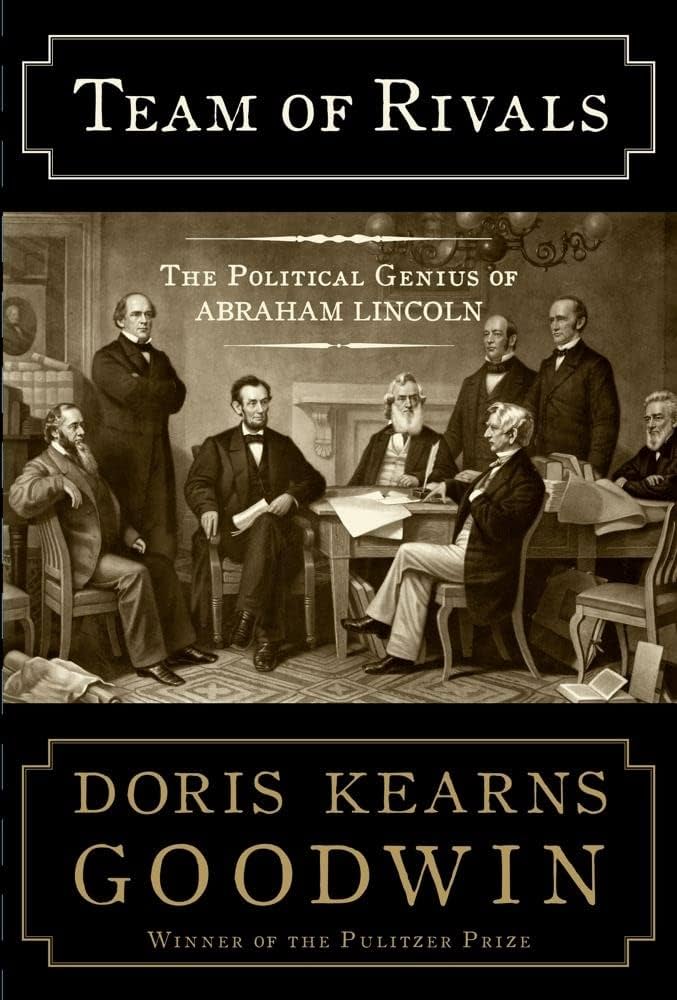
In 1860, Abraham Lincoln’s election caused the states of the South (starting with South Carolina) to secede from the Union. Lincoln was a political unknown, whose nomination by the Republican Party was surprising. Many more influential members of the party – Salmon Chase, Edward Bates, and William Seward in particular – had felt assured of the nomination. Team of Rivals: The Political Genius of Abraham Lincoln by Doris Kearns Goodwin looks at the major Republican hopefuls in 1860, and their eventual involvement in Abraham Lincoln’s cabinet. Though much of the book takes place during the Lincoln presidency, the early chapters on the 1860 election season are interesting looks at politics on the eve of the Civil War.
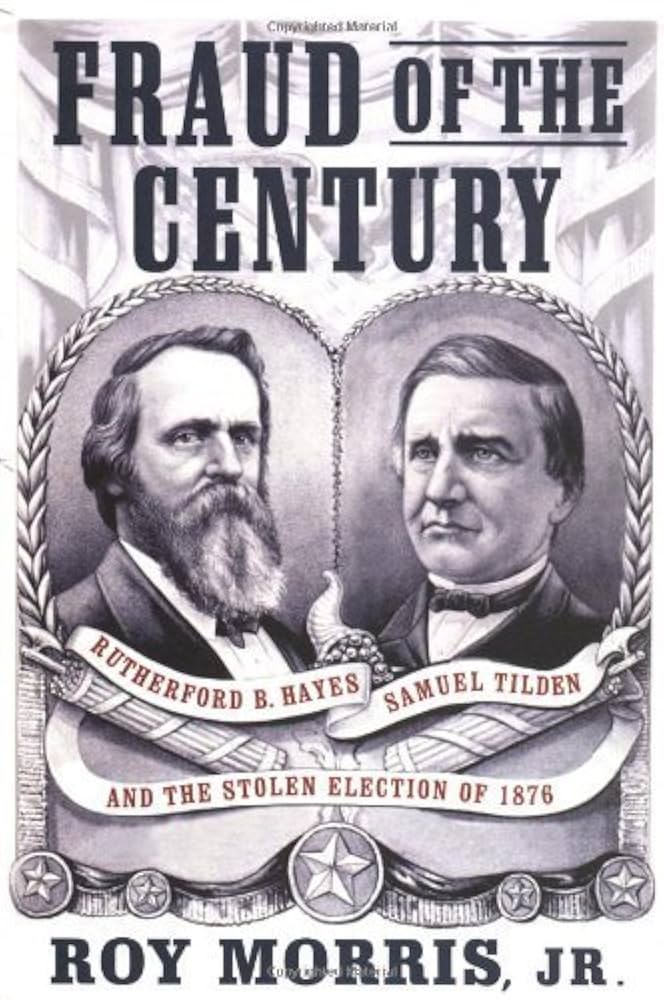
In much the same way the start of the Civil War hinged on the 1860 election, the end of Reconstruction also took place in an election year. In 1876, Rutherford B. Hayes campaigned against Samuel Tilden for the presidency. On election night, Tilden was declared the victor, though operatives of Hayes’ Republican Party were able to throw the result into question. The resulting battle saw Hayes emerge victorious by promising to end Reconstruction, undoing ten years of work. Roy Morris’ Fraud of the Century: Rutherford B. Hayes, Samuel Tilden, and the Stolen Election of 1876 presents that year’s election as the most contested in American history, even more so than Bush vs. Gore in 2000. Crucially, Morris highlights that the “true” winner in 1876 is still unanswered.
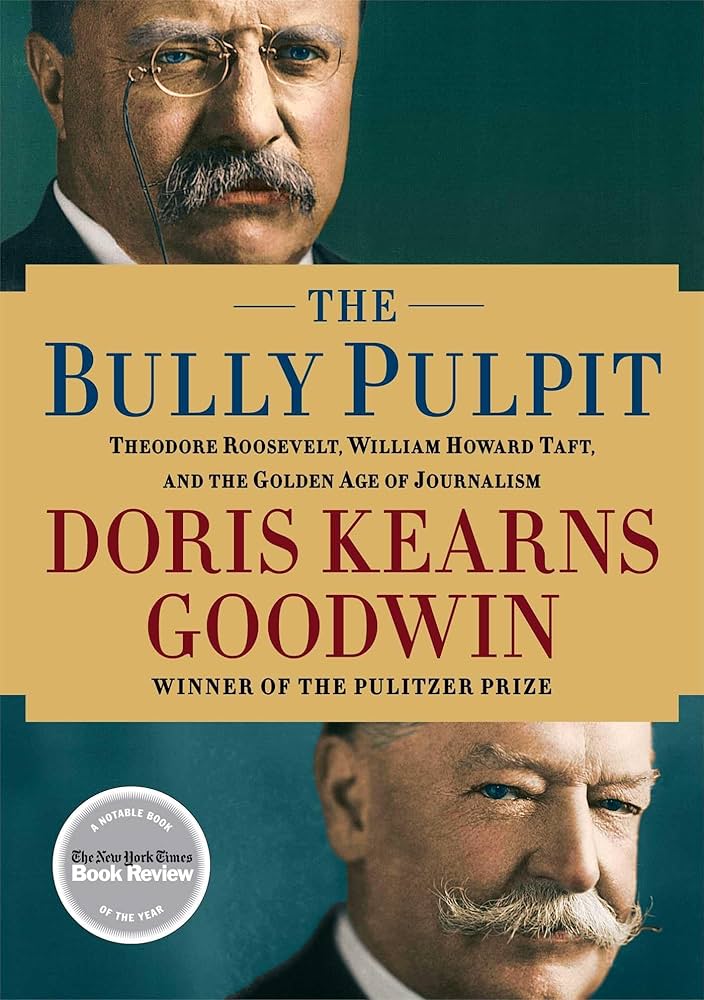
Though many elections have been hugely consequential, there is a special place in my heart for 1912. In that year, Theodore Roosevelt sought a third term and created his own splinter party. Roosevelt’s new Progressive (or Bull Moose) Party would prove unsuccessful, securing more votes that Republican William Howard Taft but losing to Democratic candidate Woodrow Wilson. My second Doris Kearns Goodwin book on this list covers this election: The Bully Pulpit: Theodore Roosevelt, William Howard Taft, and the Golden Age of Journalism. Here, the focus is on the relationship between Taft and Roosevelt, and the long story that led to the creation of the Bull Moose Party. Woodrow Wilson’s story takes a backseat to his rivals, but the Bully Pulpit shows how the Republican split in 1912 led to Wilson’s otherwise unlikely victory.
In 1940, FDR sought an unprecedented third term. The stakes were high: a year prior, Europe had been plunged into World War II. FDR supported intervention, while his main rival Wendell Willkie made his personal position more unclear but seemed to lean towards isolation. While Willkie may have been FDR’s main rival for the election, the leading isolationist was Charles Lindbergh. Several books have been released recently about Roosevelt vs. Lindbergh, including H. W. Brands’ latest book America First: Roosevelt vs. Lindbergh in the Shadow of War. (I have not yet read Paul Sparrow’s book on the same subject but hope to soon.) The main question that continues to surround the Roosevelt-Lindbergh debate is Lindbergh’s connection to fascism. Brands is of the opinion Lindbergh was more pro-isolation than pro-fascist, but Lindbergh’s connections to Hitler’s followers cannot be ignored. A. Scott Berg’s Lindbergh biography takes a similar position. It is interesting how, perhaps more than any other election, FDR’s campaigns for the White House have spawned alternate history novels where he loses. Sinclair Lewis’ It Can’t Happen Here and Phillip Roth’s The Plot Against America both are set in a world where FDR is defeated, and America turns against itself.
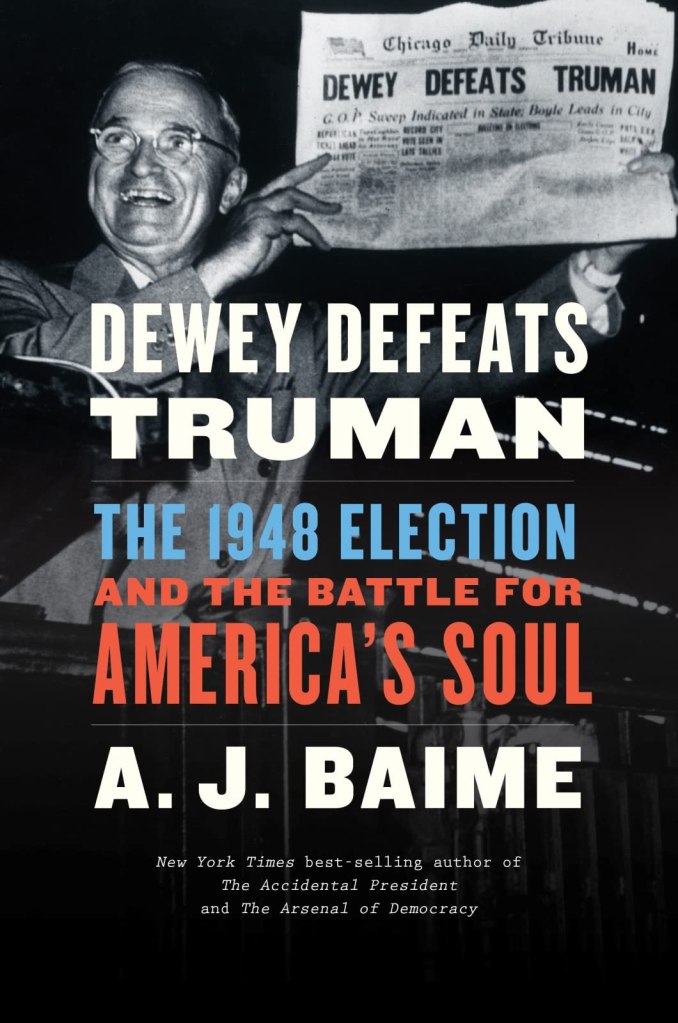
The election book I read most recently was Dewey Defeats Truman: The 1948 Election and the Battle for America’s Soul by A. J. Baime. The image of a victorious Harry Truman holding an erroneous “Dewey Defeats Truman” headline is one of the most iconic in campaign history. Baime shows how 1948, as the first election after WWII, helped to set the tone for the rest of the twentieth century. The heir of FDR, Harry Truman, had a surprising victory over New York Governor Thomas Dewey. Truman and Dewey had similar platforms, and both parties would remain relatively alike into the 1960s. The seeds of future splits were also planted in 1948. Henry Wallace’s Progressive Party ran a much more liberal campaign than either major candidate but opened himself up to accusations of Communist influence. At the other end of the political spectrum, Strom Thurmond became the first Dixiecrat candidate, an omen of the 1960s.
The final book to highlight is not about a specific campaign but instead is about the origins of modern campaigning. If Then: How the Simulmatics Corporation Invented the Future by Jill Lepore is the forgotten story of the company that brought computers to election campaigns. In the 1960s, Simulmatics transformed polling and campaign tactics by making it possible to analyze what messages would resonate with voters, where to campaign, and what demographics to focus on. The computers of Simulmatics did more than work on elections; the company played a unique role in the Vietnam War as well. However, it is their role in JFK’s 1960 campaign that transformed American politics forever.
From the partisan fights of the early republic to modern election tactics, these books offer a small window into how elections have changed American history. It is a tradition that remains key to our country’s past and future, allowing us all to play a role in creating a better America.
Interested in subscribing to my blog? Type your email below to be notified about new posts.
 Andrew J. Bramlett