

On July 13, I visited Poplar Forest, Thomas Jefferson’s retreat home. While Monticello was his primary residence, due to his fame, Jefferson realized the need for a home away from home. In many ways, the architecture resembles Jefferson’s earlier design for Monticello.
These photos were originally posted on my Archive of the Past social media page. During this same trip, I took photos of Monticello and the University of Virginia.


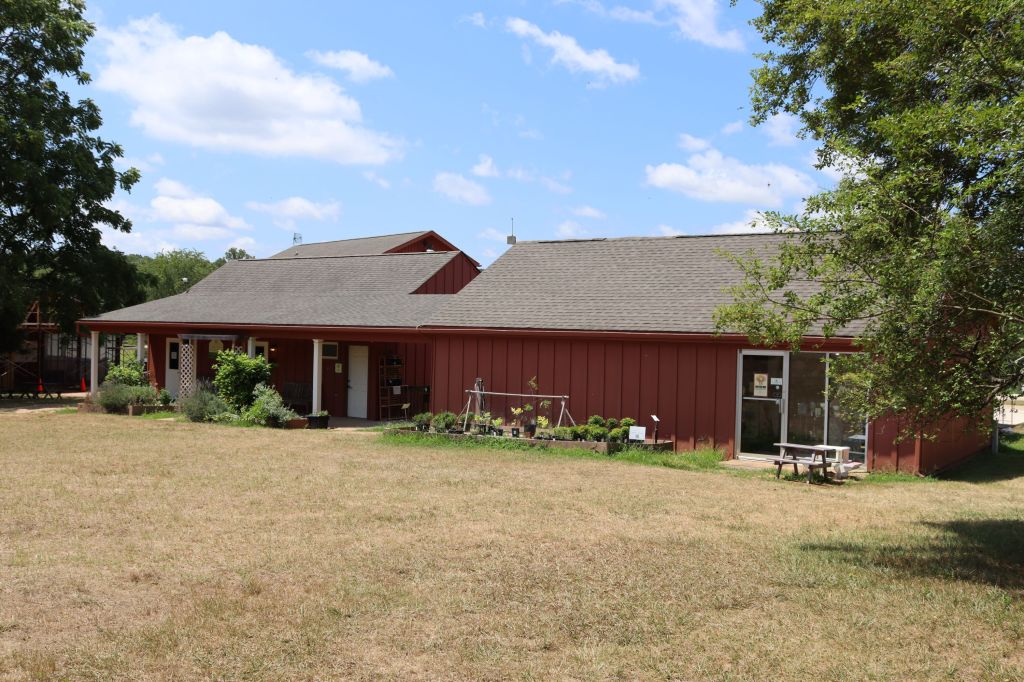
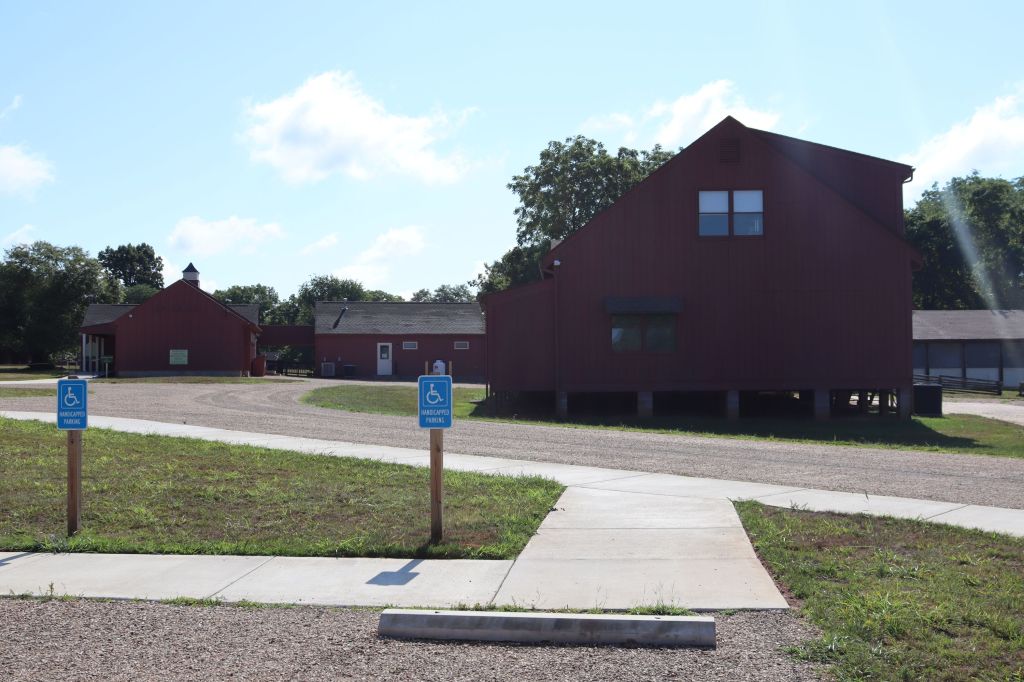

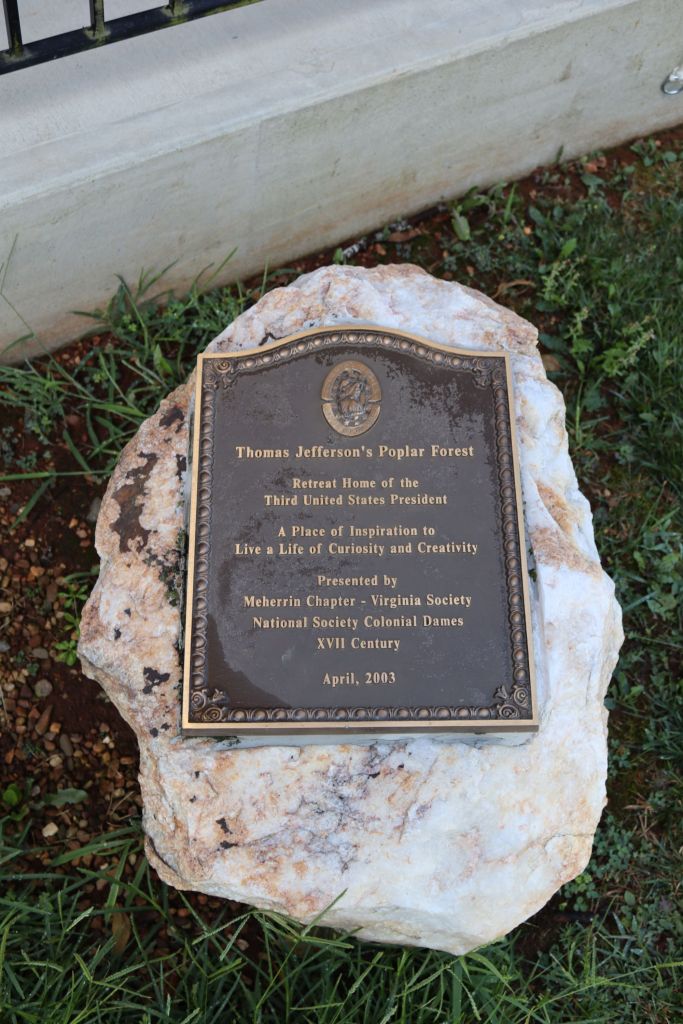
Our exploration of Jefferson’s Poplar Forest began at the visitor center. The site was purchased for preservation in the 1980s and is still undergoing restoration and archeological work. Seeing the work being done at the site offers an interesting glimpse into how historic houses are preserved.


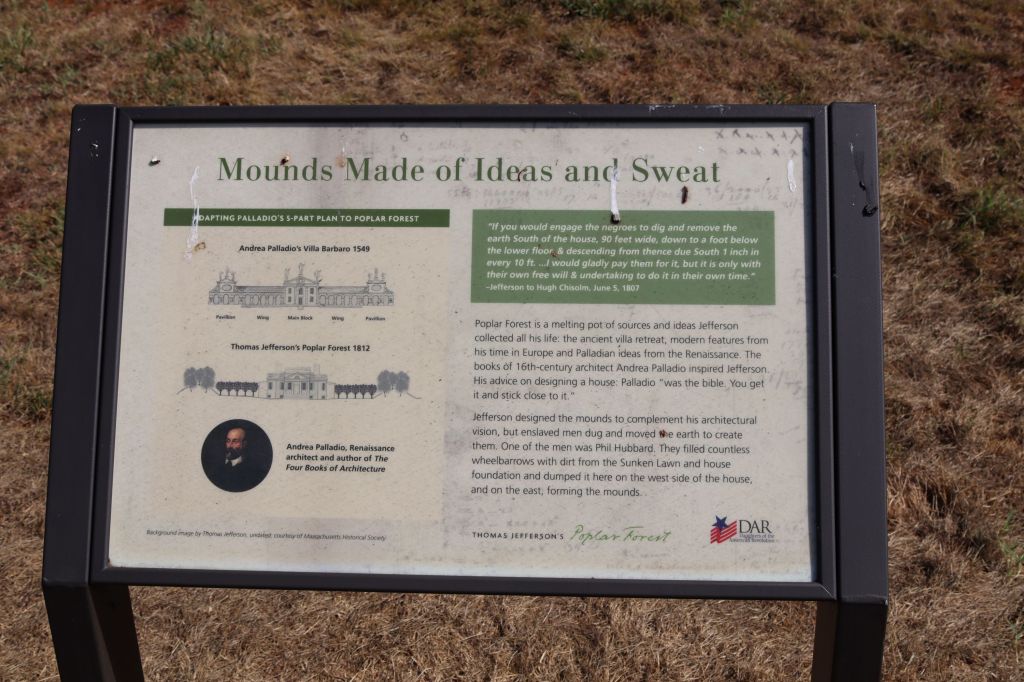
The house’s proportions are based on Andrea Palladio’s 1549 design for the Villa Barbaro. Palladio’s design has a central house, two wings, and pavilions at the ends. Poplar Forest has a main house, two rows of trees, and mounds at the ends. To the east of the house is a wing, while the west wing was never built.
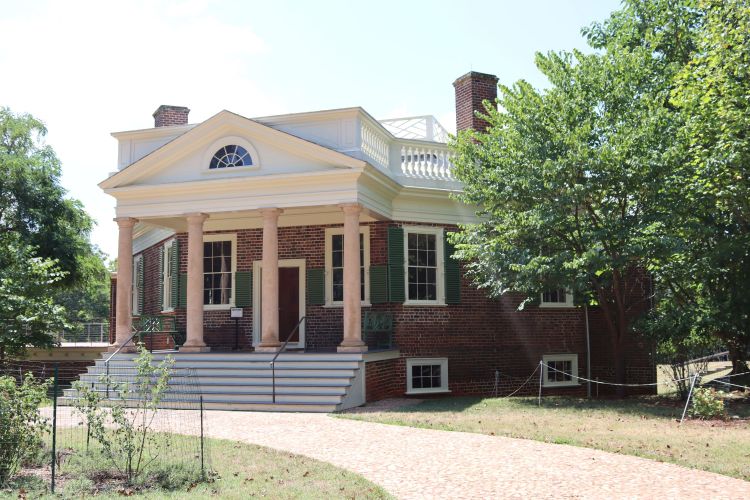
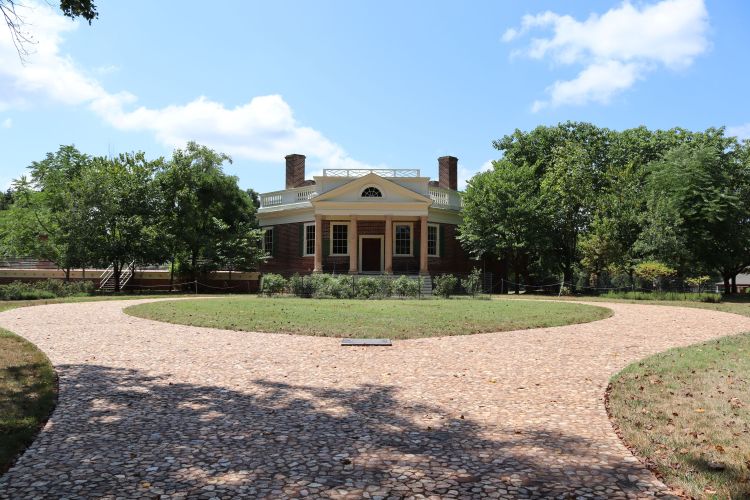


From the visitor center of Poplar Forest, you can see the rear of Jefferson’s retreat. The side in these pictures is the front. While most of the material in the driveway is modern, the larger stones near the house date to Jefferson’s time. Underneath a glass plate, some of the original gravel can be seen.
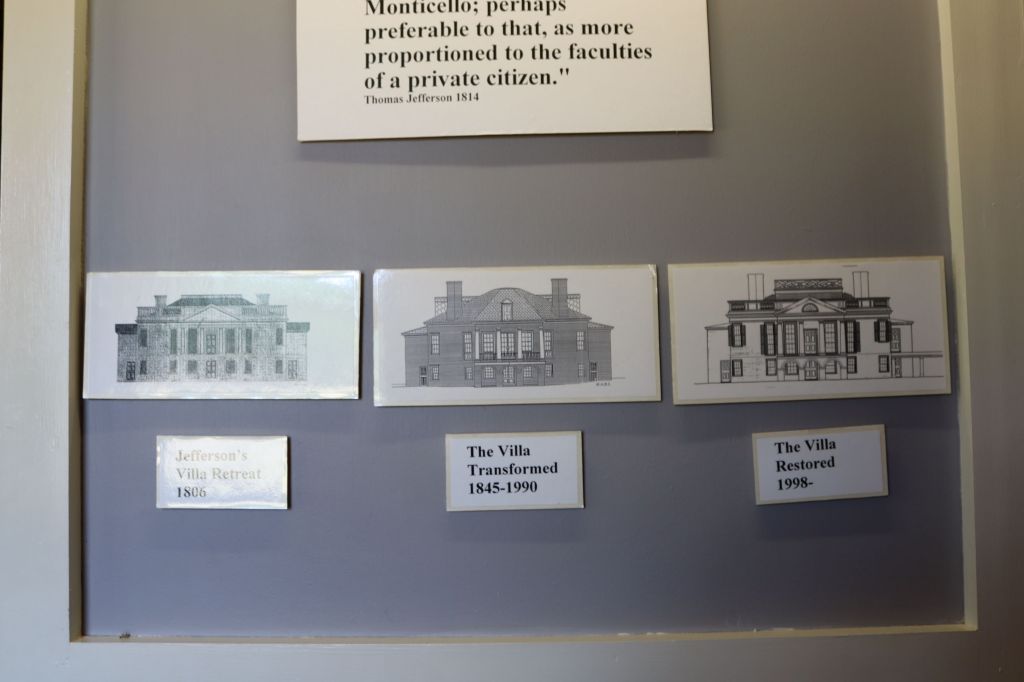

After suffering a major fire in the 1840s, the owners of Poplar Forest modified the home substantially. This display shows some of the changes to the house.
After the house was purchased for preservation, its interior was stripped bare, as very little was original to Jefferson’s time. Since then, the caretakers of Poplar Forest have worked to restore it to how what Jefferson have recognized.


On the porch, the columns are brick covered with stucco. The stone beneath the door had to be replaced in recent years. The block now in place was once part of the steps of the US Capitol.

This plan shows the main floor of Poplar Forest. On our tour, we started in the Northwest Chamber and worked roughly counter-clockwise, ending in the Northeast Chamber. Jefferson loved octagons in architecture, a fact also mentioned in Monticello. Here, the house itself is an octagon, and the rooms surrounding the dining room are octagonal (though some are divided in two).


The Northwest Chamber of Poplar Forest is a very small room used as a bedroom at one time. Like the rest of the home, the stucco, paint, and trim are modern recreations.

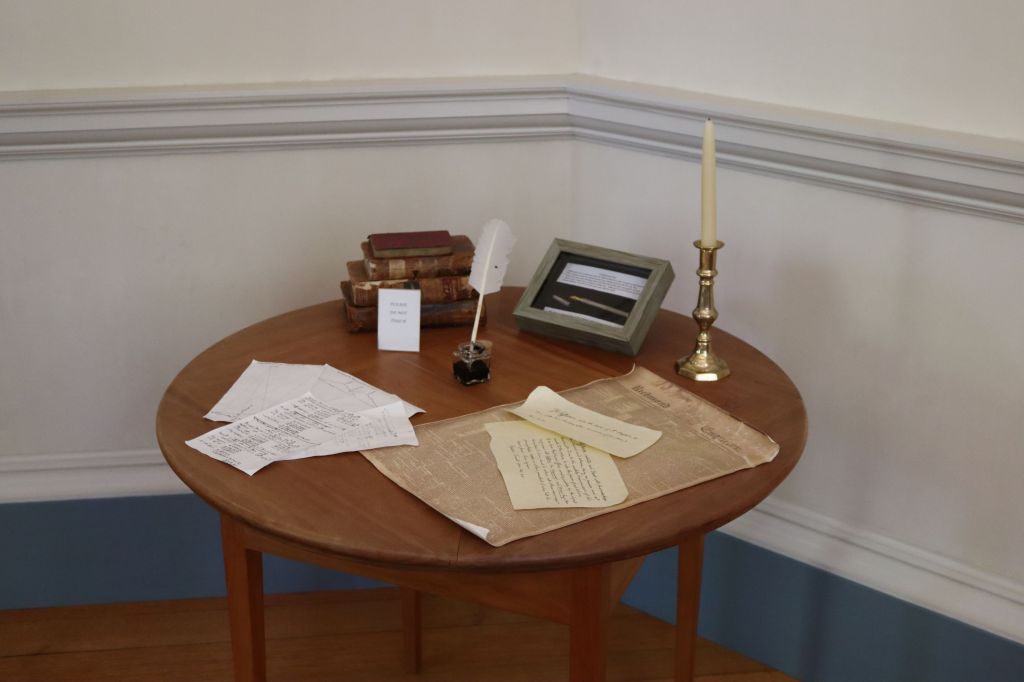
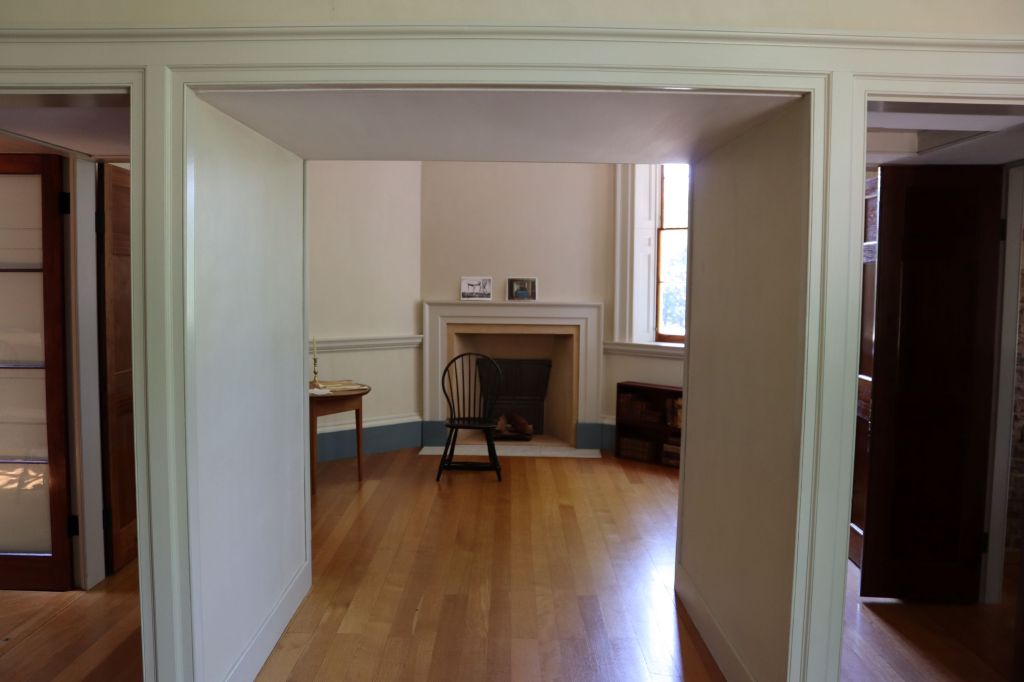
The next room at Poplar Forest is Jefferson’s bedroom. Like his room at Monticello, it has an alcove bed. It was the only room in the house to have access to an indoor bathroom.

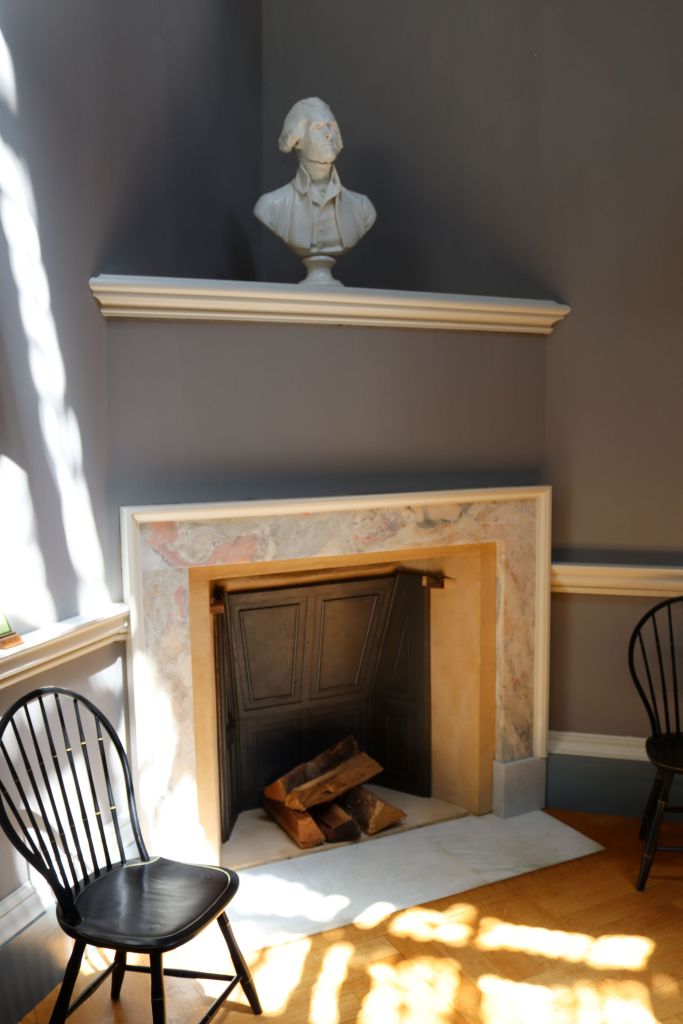
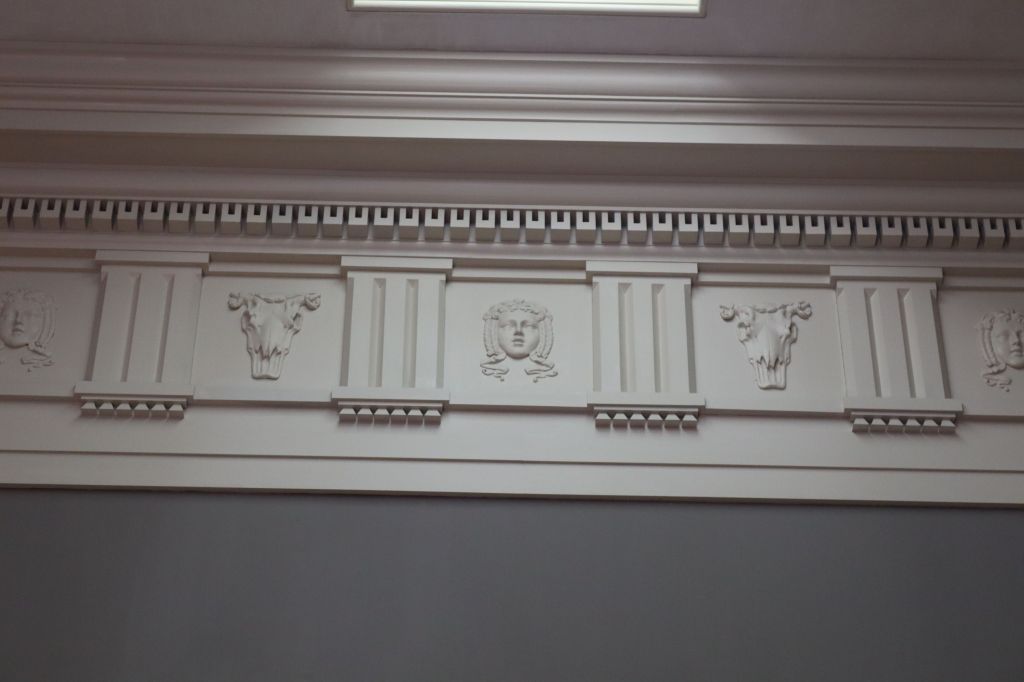
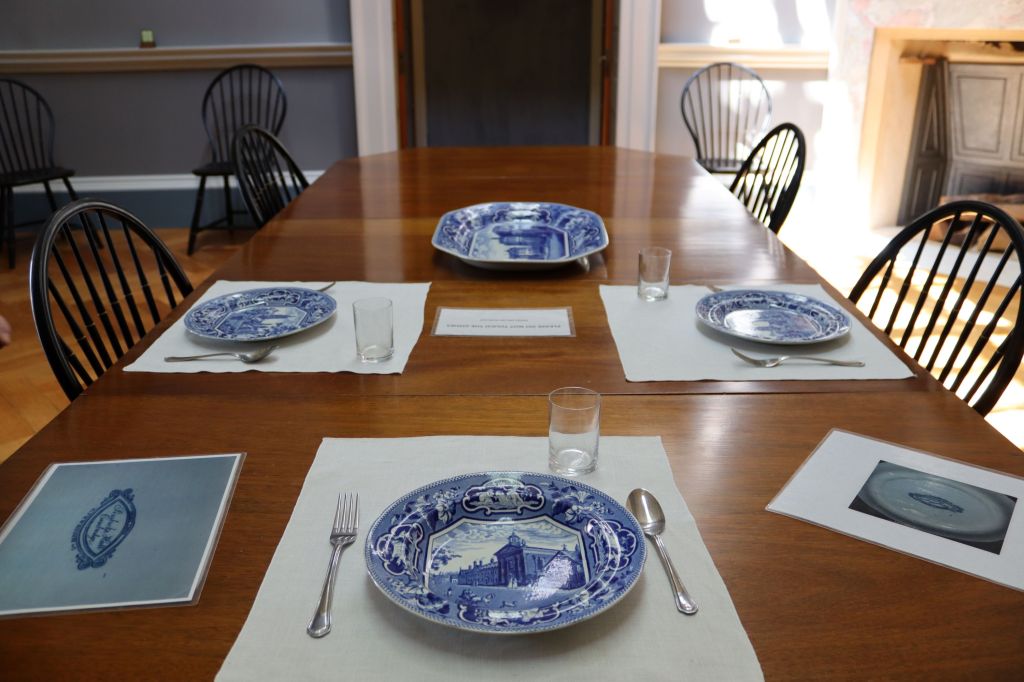
The dining room is a 20-foot by 20-foot cube in the center of Poplar Forest. The China on the table is the same pattern used by Jefferson. Later, the house owners, looking for more space, lowered the ceiling and added a room above. This change has since been undone. Jefferson may have modified the plan for this room during construction, as there is evidence that the fireplace chimney originally went all the way to the ceiling.

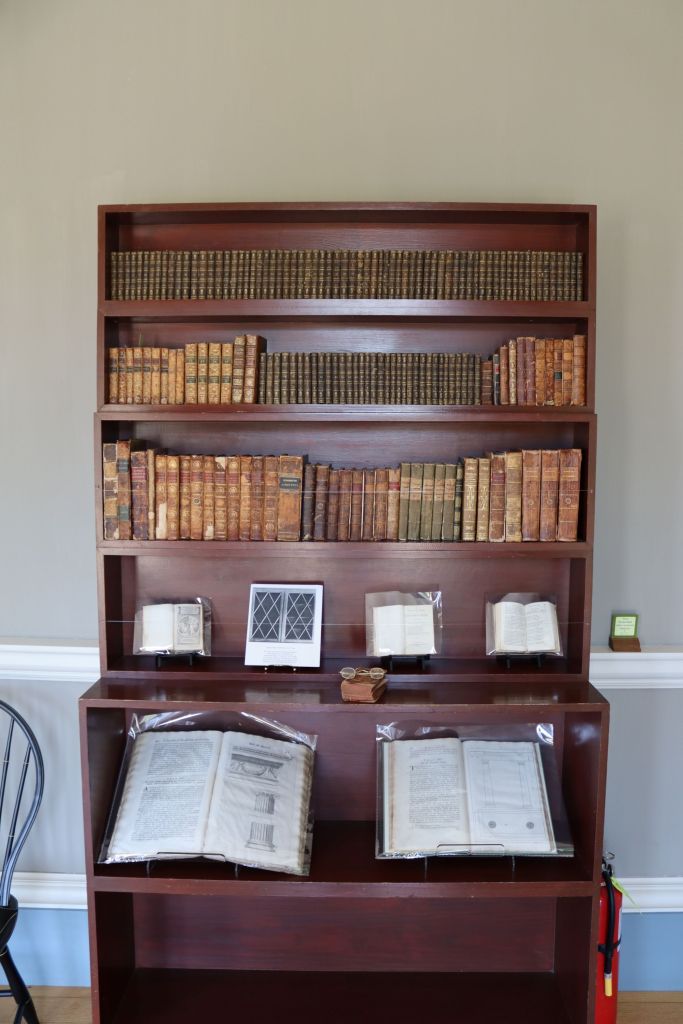
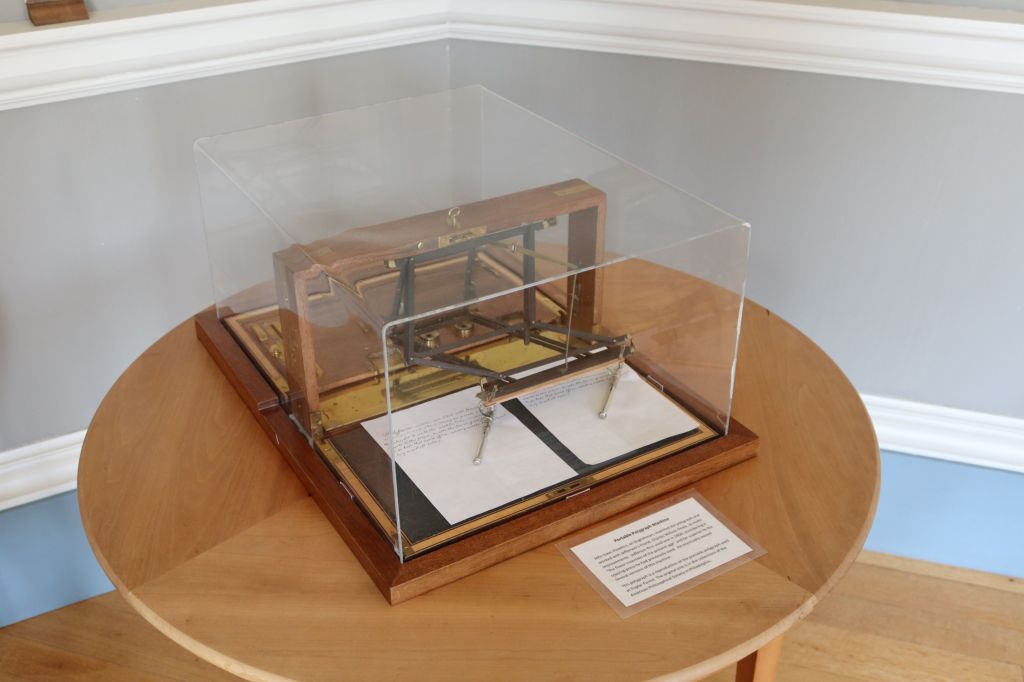
The parlor is the only room at Poplar Forest to be a complete, uninterrupted octagon. This room looks out on the south lawn. Here, Jefferson would have had the books he traveled with. Using specially built travel bookcases, he would bring 1000 books from Monticello when visiting Poplar Forest.


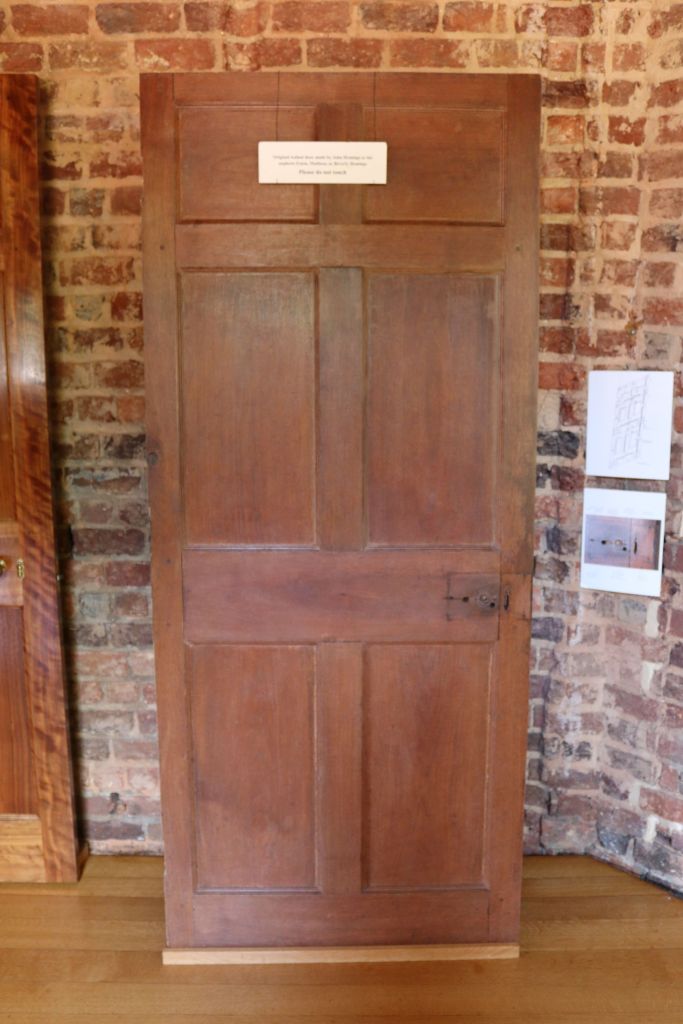

The bedroom of Jefferson’s granddaughters at Poplar Forest is not finished, making it easy to see the bones of the house. The layers of plaster can be seen, along with the framing of an alcove bed. The door propped against the wall is original to the house and was made by Sally Hemmings’ brother, John.

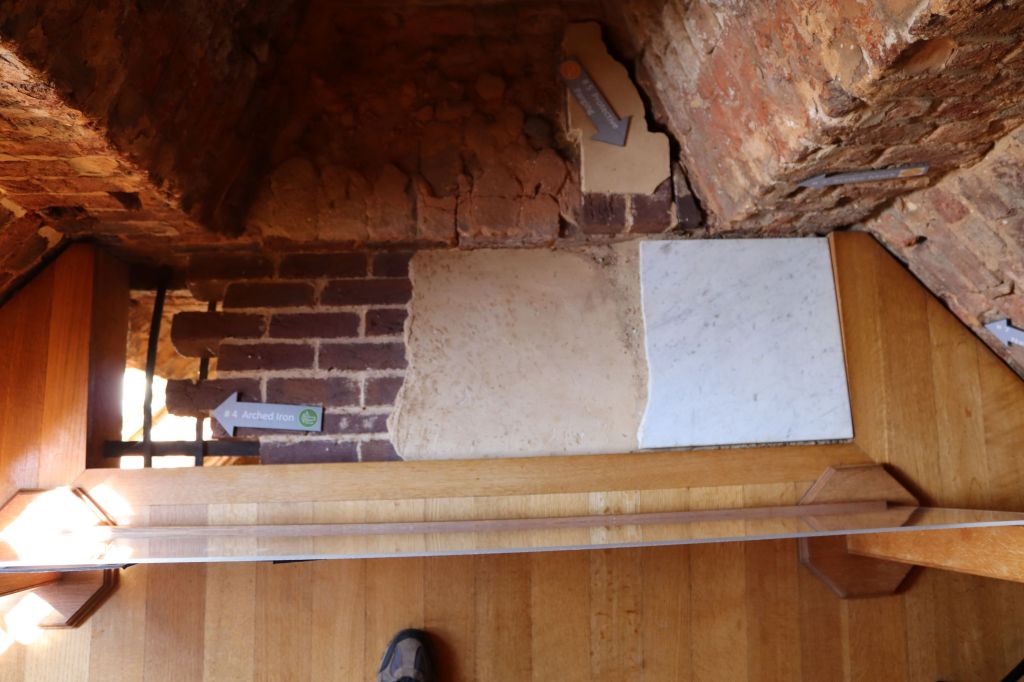
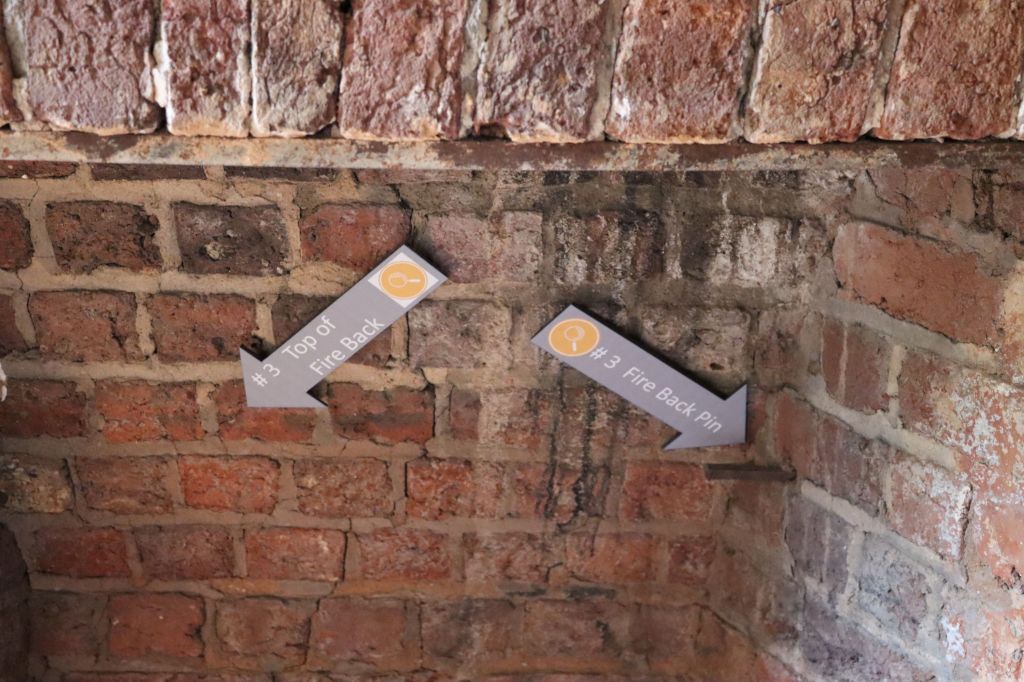
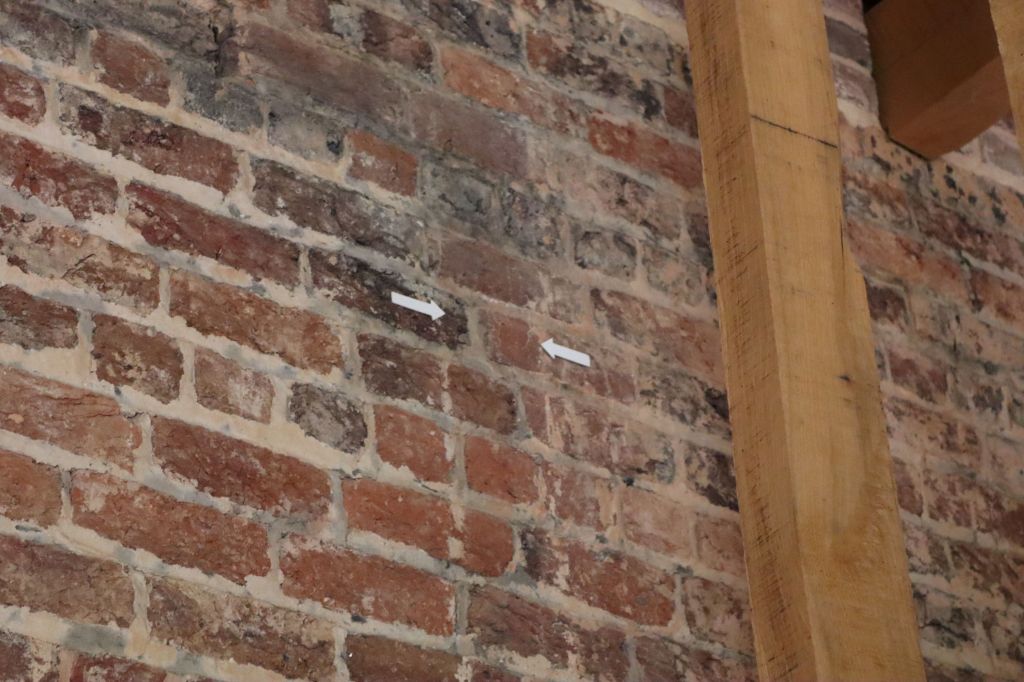
The lack of plaster in this room at Poplar Forest makes it easier to see the archeological traces of the original home, including evidence of lost walls for the alcove bed and the construction of the fireplace.


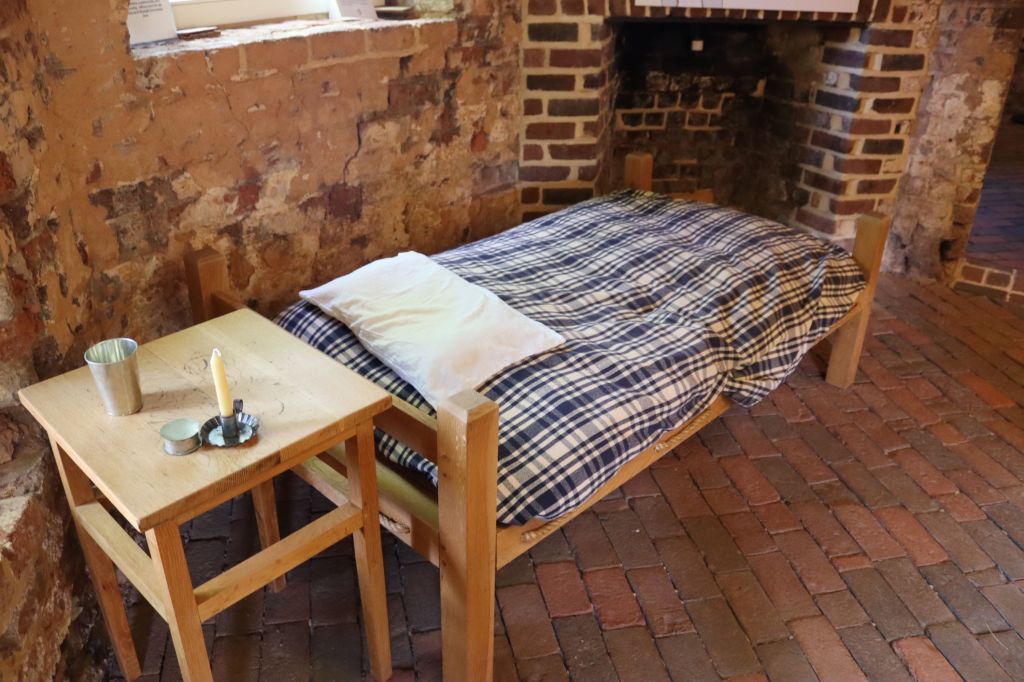
Poplar Forest is two stories – the main level was where Jefferson resided, while the lower basement was home to his enslaved servants. When Jefferson was not at Poplar Forest, the whole house was closed. This lower level was also home to a cellar. Today, it is an exhibit space focusing on the home’s design, recent archeological work, and the enslaved men and women who worked at Poplar Forest.
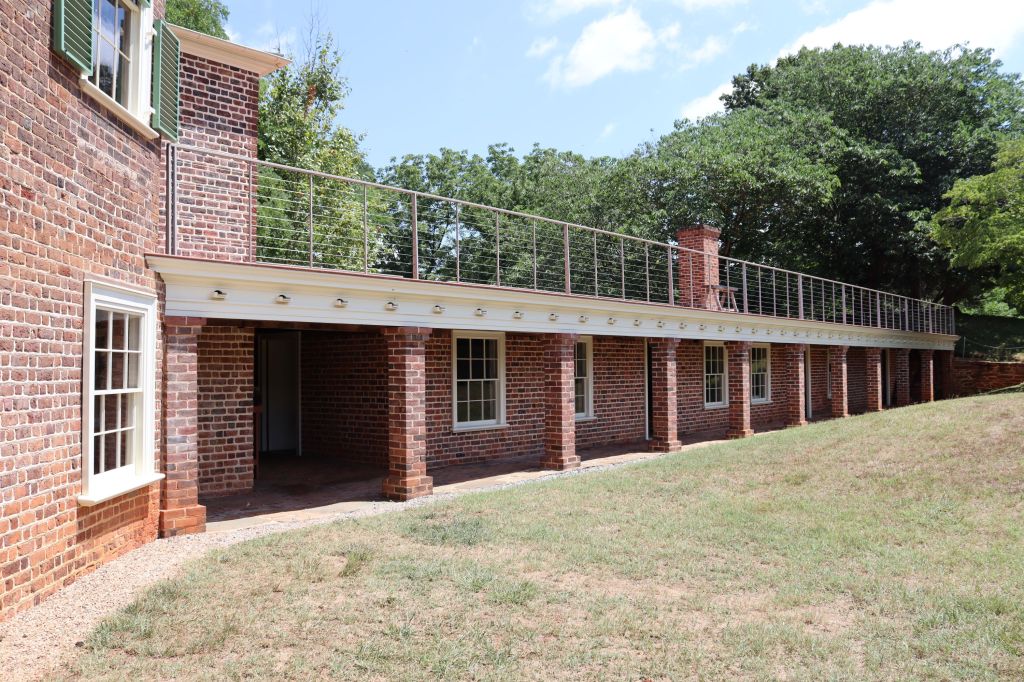

To the east of the main house at Poplar Forest is a wing of offices. There were originally four rooms, but the two closest to the house were demolished, and the two furthest became a guest house. In more recent years, the two missing rooms have been rebuilt.

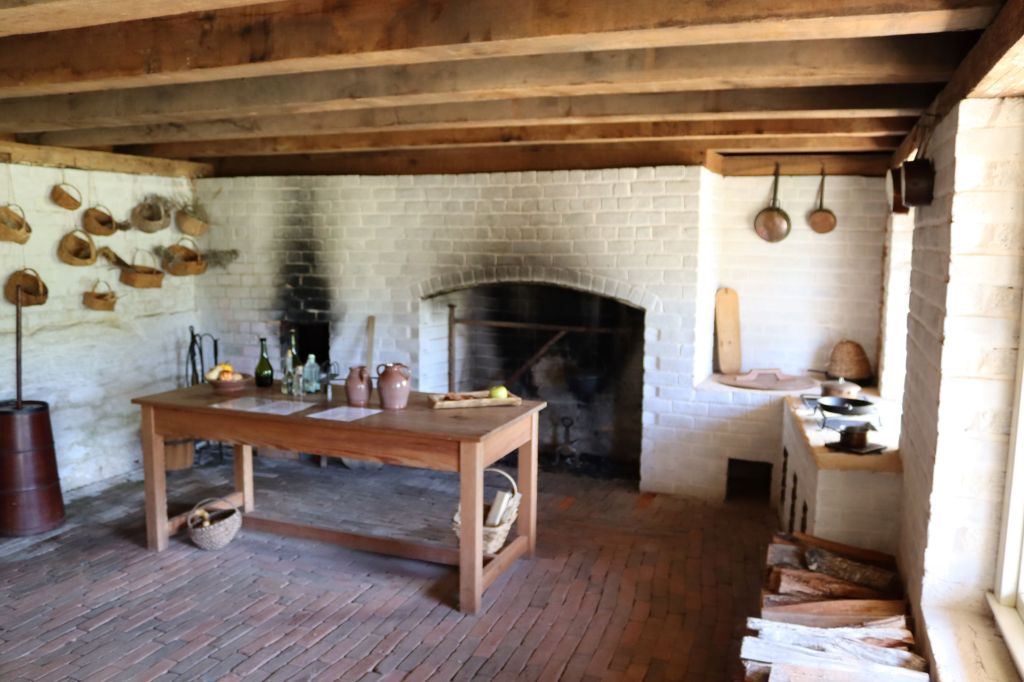
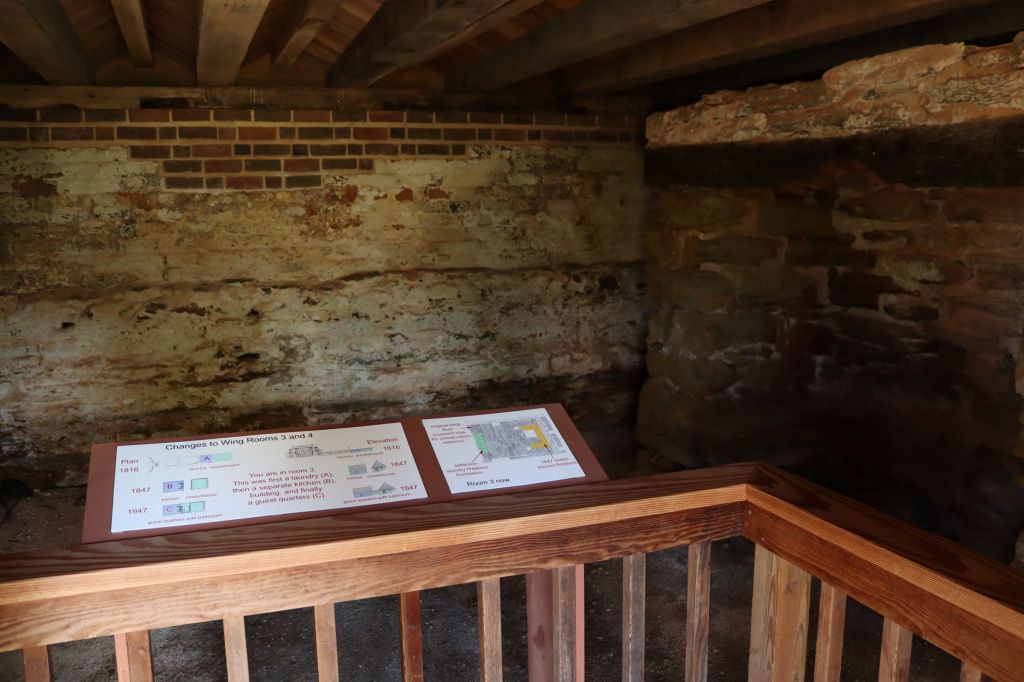

The four offices in the wing of Poplar Forest were used for a variety of purposes, including a kitchen, laundry, and smokehouse. Enslaved laborers worked here, much like the two wings at Monticello.

Stretching away from Poplar Forest were trees, one set of which had been replanted in the original locations. At the end of each row was a mound and a privy. Jefferson had a private indoor privy near his bedroom, and all others had to use these structures.
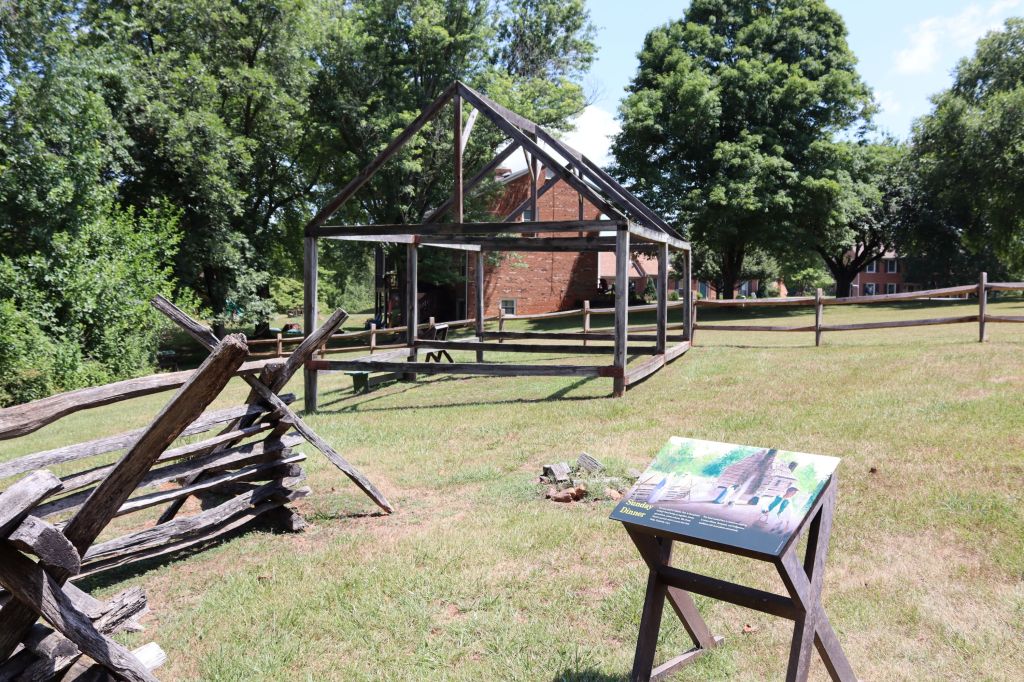

Even when Jefferson was not at Poplar Forest, it was an active plantation. The homes of the enslaved community moved several times. One of the sites now has a frame representing these long-lost homes. Due to modern development, it is almost in a cul-de-sac.

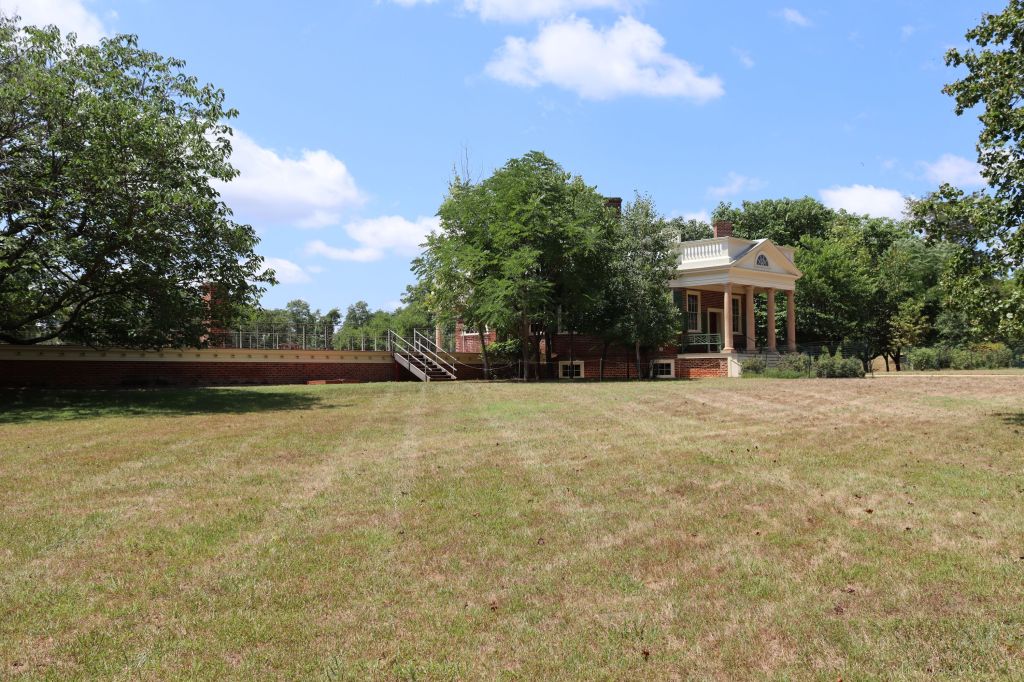
Poplar Forest was a wonderful site to visit and a fascinating way to see archeology and historic preservation in action. If you have not done so already, be sure to check out my photos from Monticello and the University of Virginia.
I hope you enjoyed these photos from my travels!
Interested in subscribing to my blog? Type your email below to be notified about new posts.
 Andrew J. Bramlett
3 thoughts on “Trip Photos – Poplar Forest”
Comments are closed.