
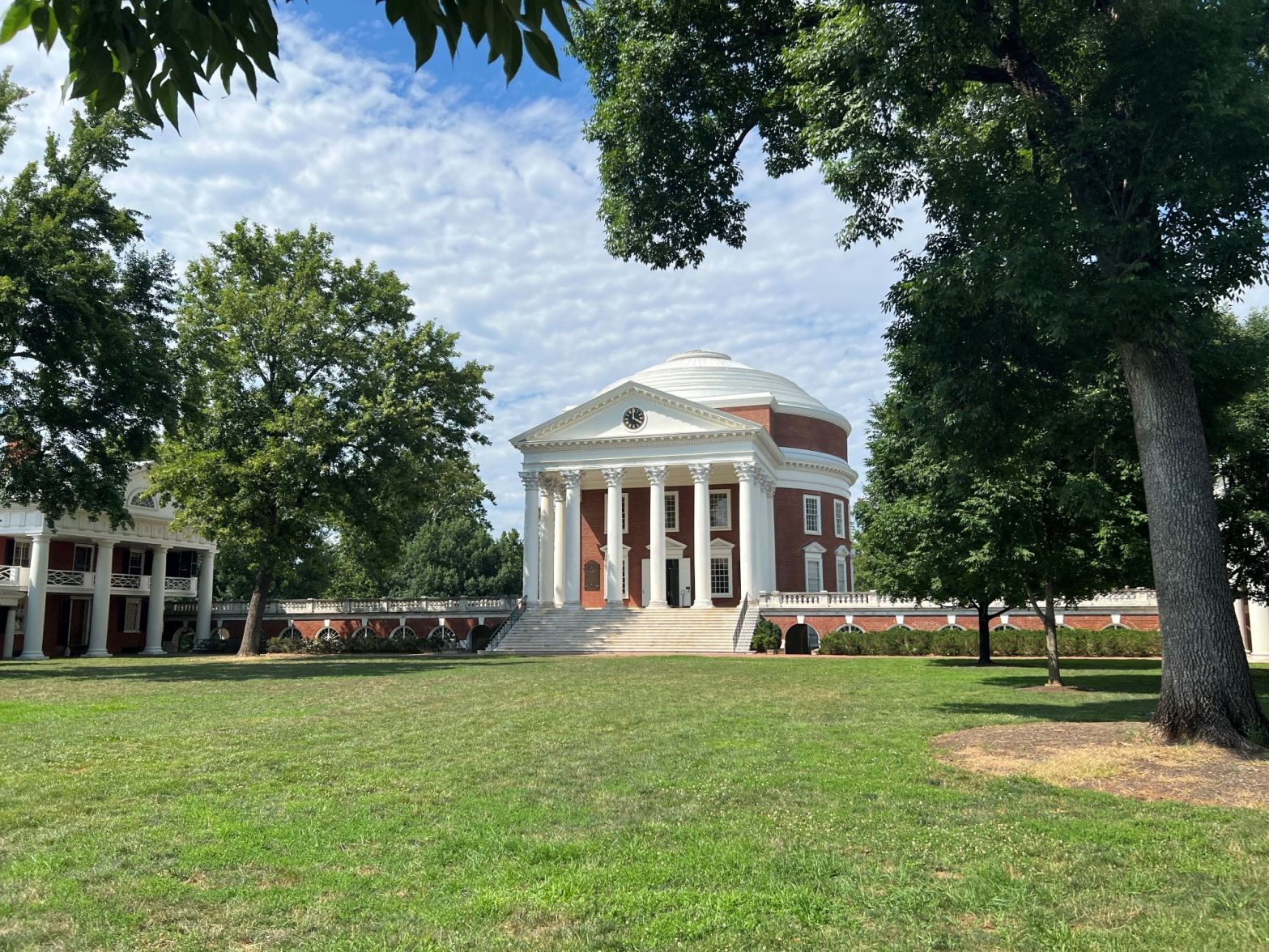
During the week of July 8, I attended a Rare Book School course at the University of Virginia. During the week, I took many photos of the campus. Some of the highlights are featured below.
These photos were originally posted on my Archive of the Past social media page. During this same trip, I took photos of Monticello and Poplar Forest.
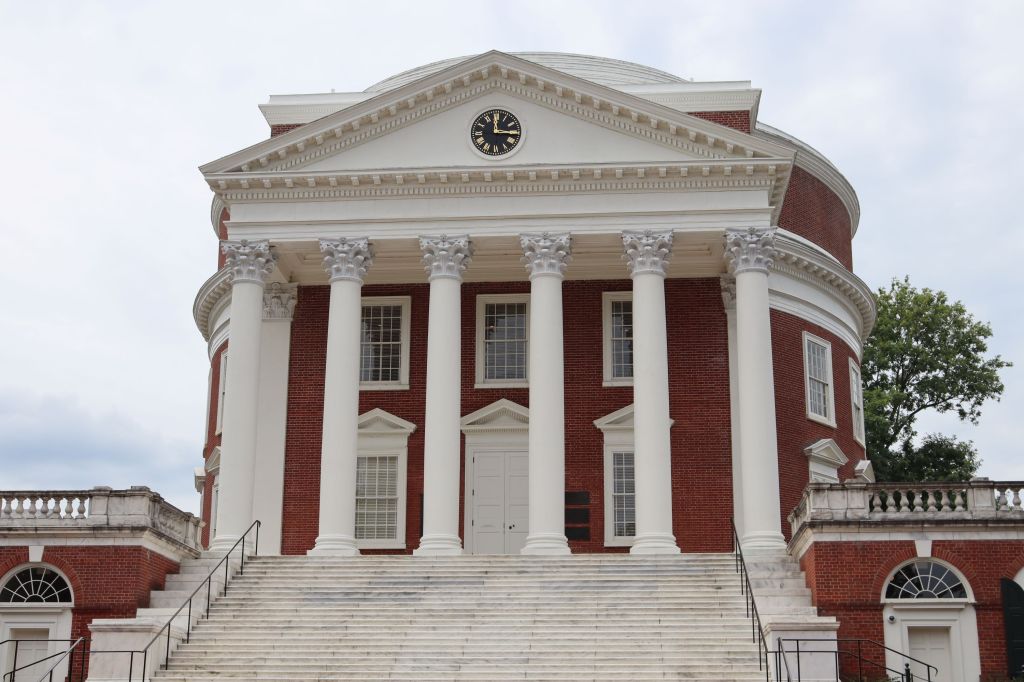

The Rotunda is easily the most iconic building on the University of Virginia campus. This is the side you can see from the road, though it is actually the building’s rear.
In 1853, the building was extended on this side when the Annex was built by architect Robert Mills. A devastating fire started in the Annex in 1895, and it was never rebuilt. The Rotunda also suffered major damage, but was preserved.

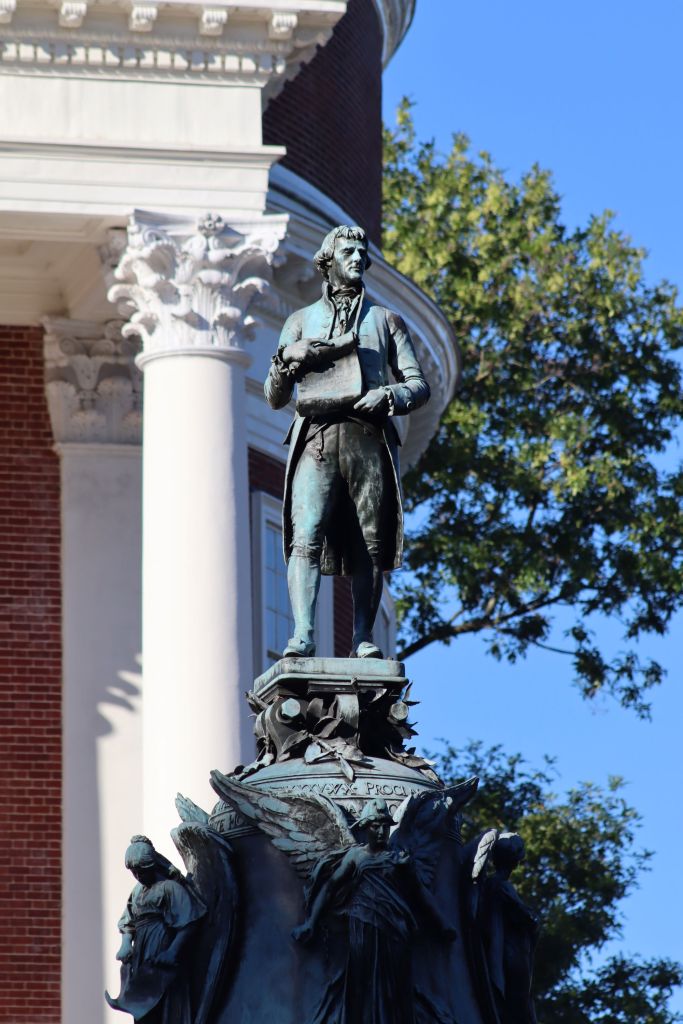
The campus of UVA has several statues of the school’s founder, Thomas Jefferson. This statue is along University Avenue and was designed by Moses Ezekiel. It was dedicated in 1910.
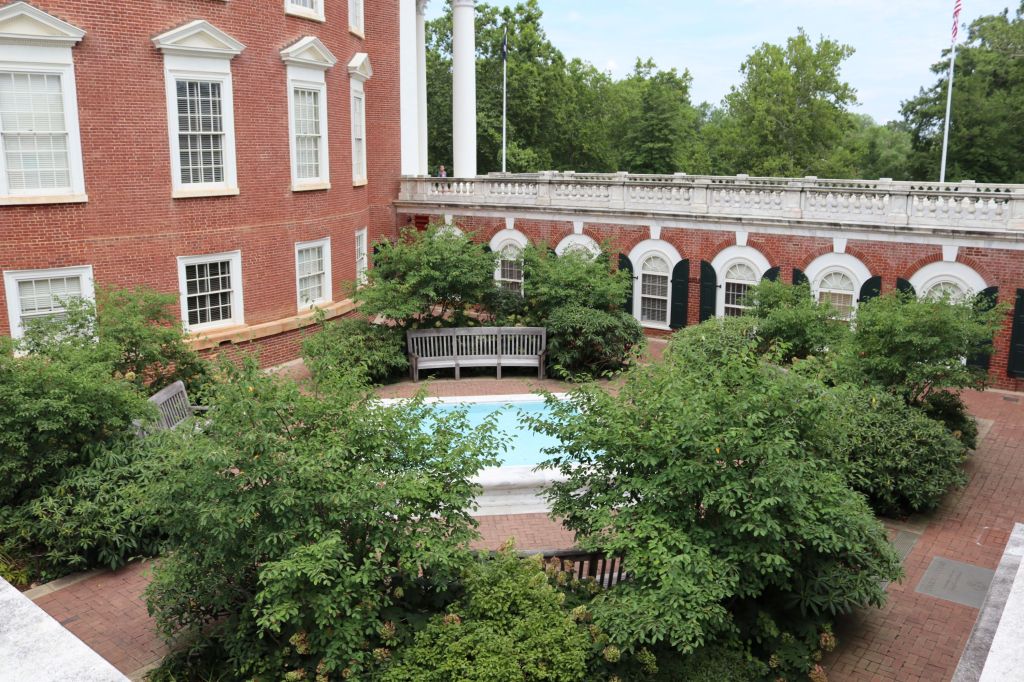


The Rotunda at UVA is flanked by courtyards. These spaces were not part of Jefferson’s original plan but make a nice place to rest and eat.


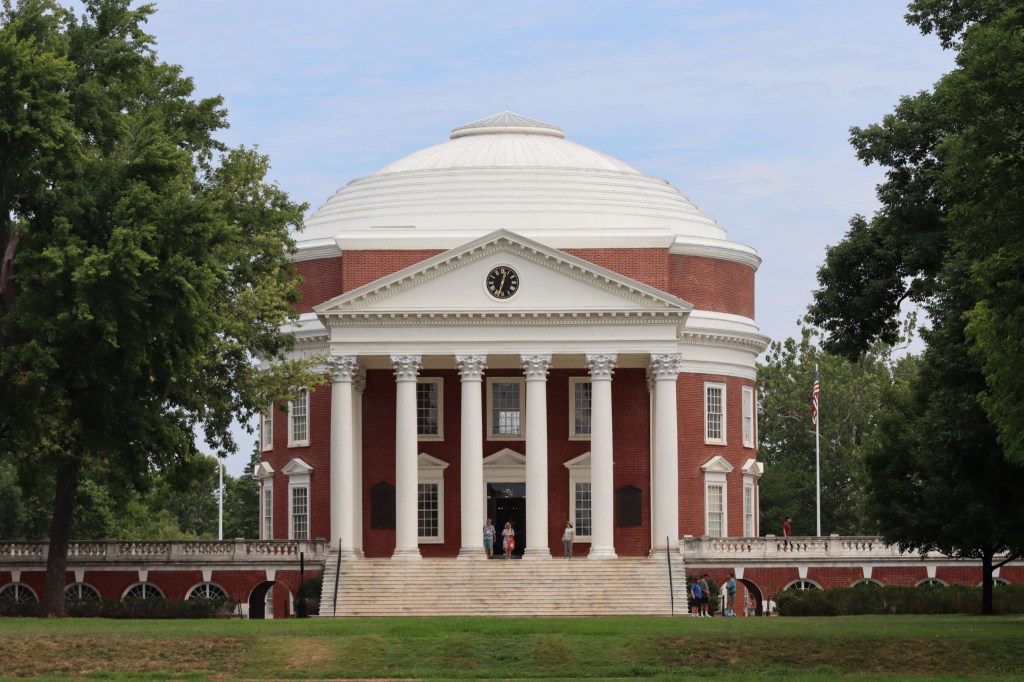
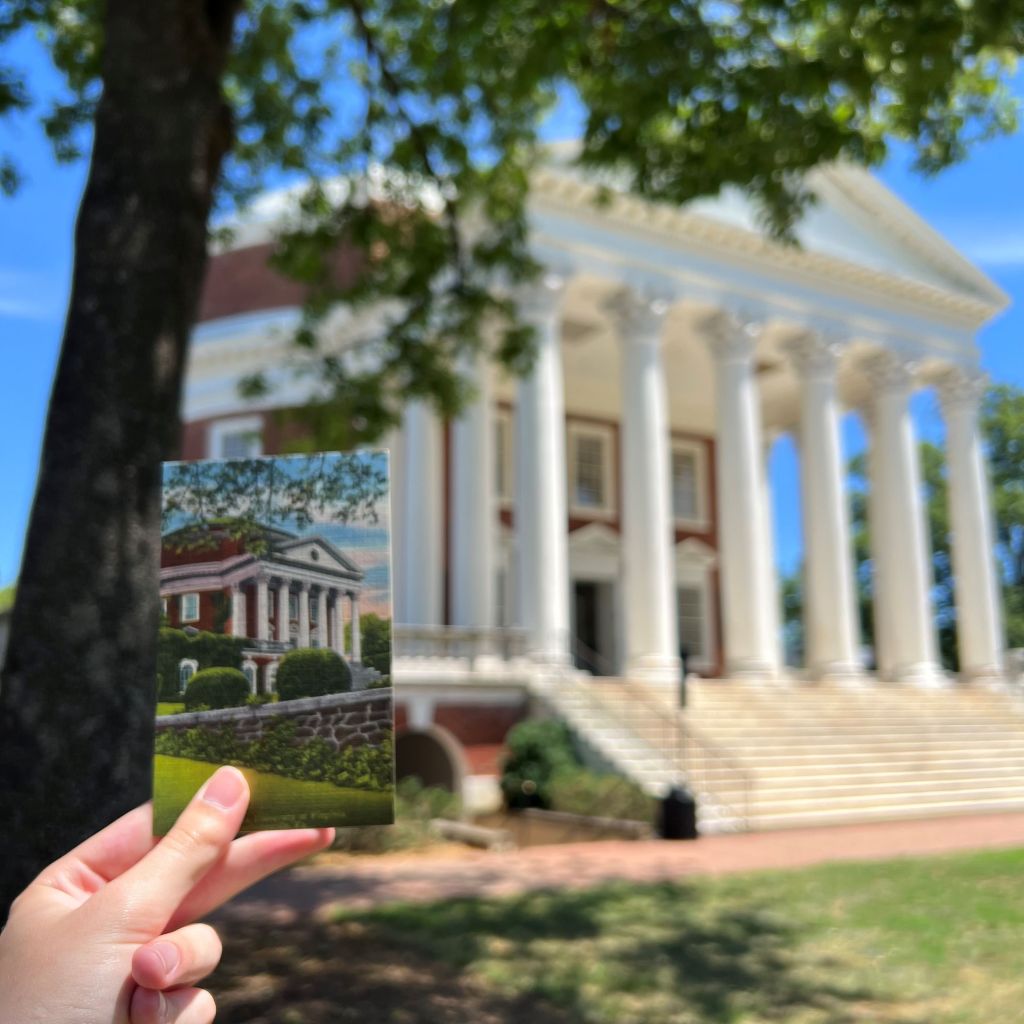
The angle most commonly seen of the UVA Rotunda is the south side, as it faces the main lawn. It is easy to see from here how the Pantheon in Rome inspired the building’s design.
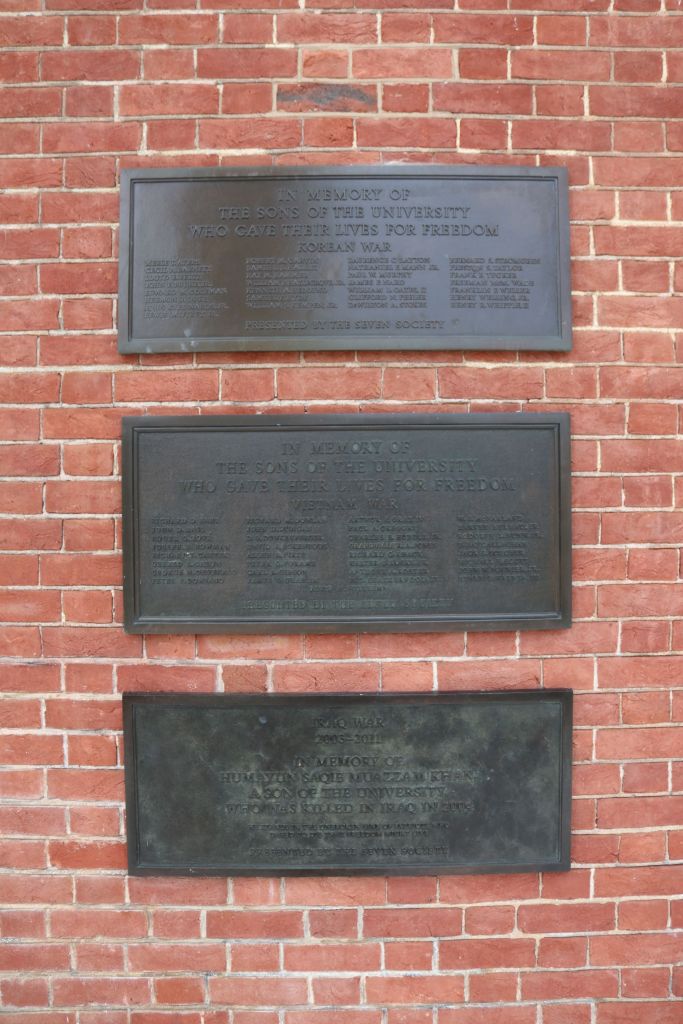

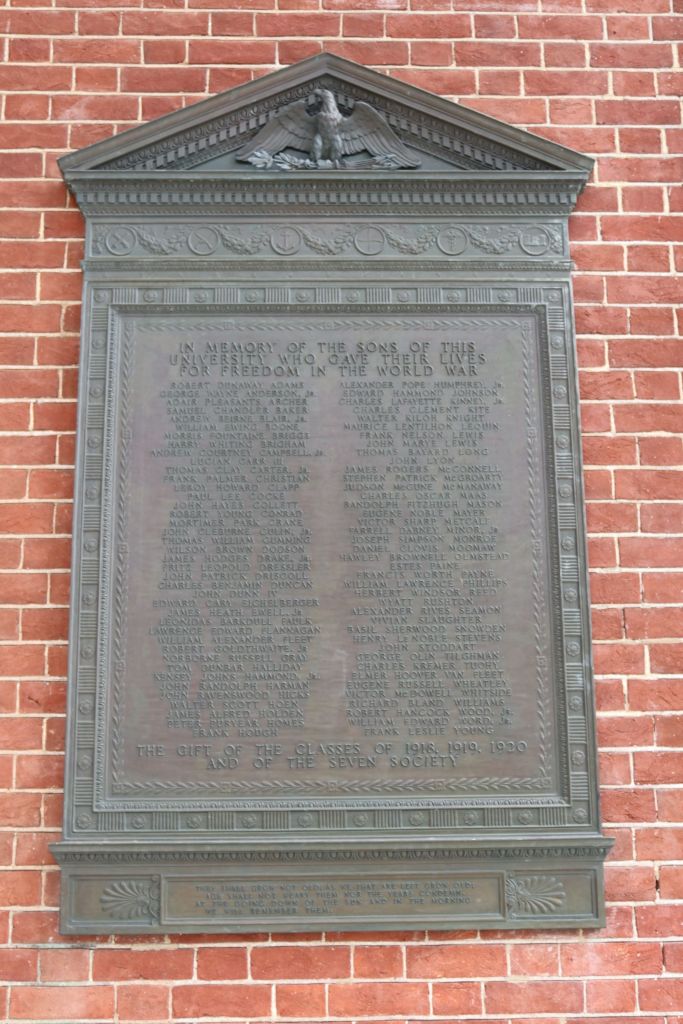

The UVA Rotunda has several memorials to students killed while serving in the military, along with a memorial to former student Woodrow Wilson. These can be found in the building’s porticos.
On entering the Rotunda on the main level, you are greeted by this statue of Jefferson. On the same floor are conference and sitting rooms.
When the Rotunda burned in 1895, students rescued this marble statue of Jefferson dating back to 1861. Allegedly, it was carried out on a mattress. Students also saved books and art from the blaze.


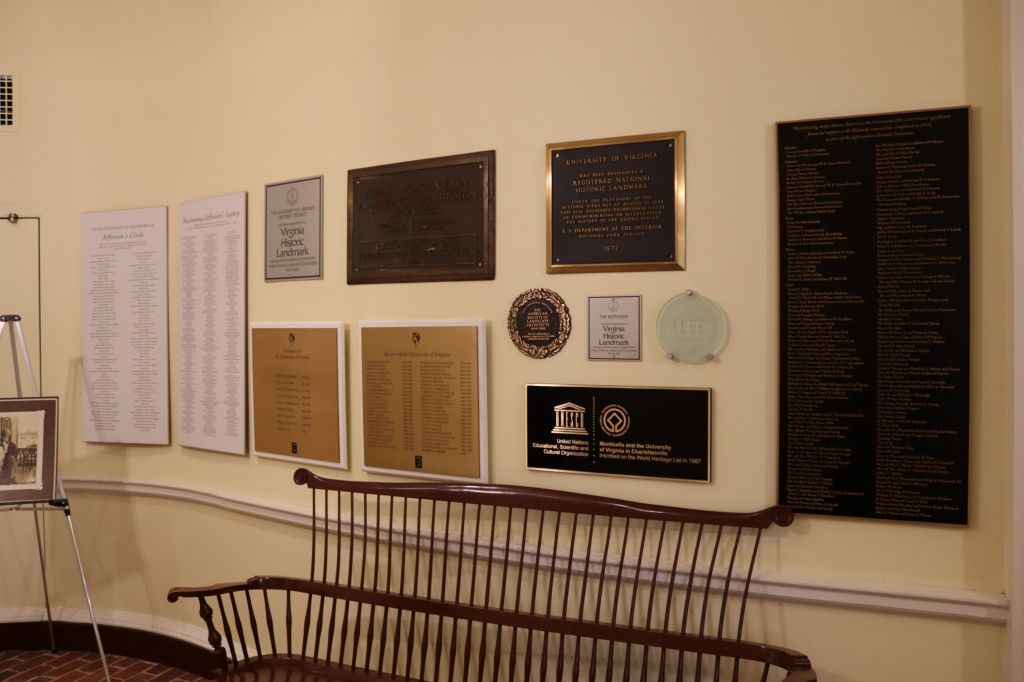
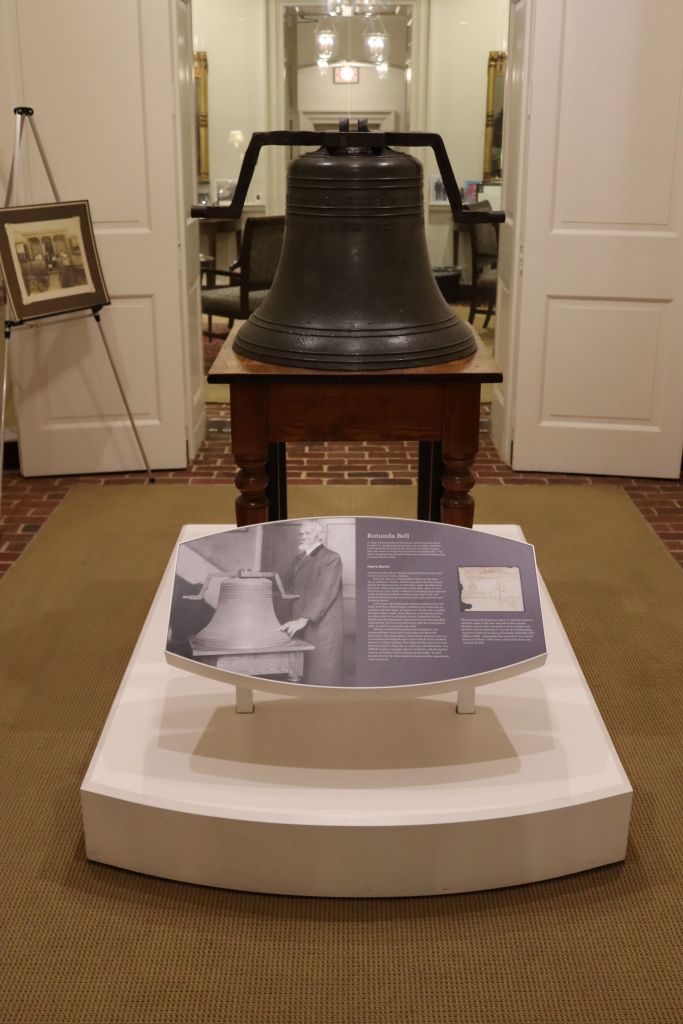
The lowest level of the Rotunda is home to plaques about the awards and recognition the historic structure has received. On the left side is a lecture room, while a museum is on the right. In the middle of this hall is the original school bell. The bell was historically rung by Henry Martin, a formerly enslaved man who worked at UVA after the Civil War. The bell has not been rung since it was damaged in an 1886 prank.

Because of fire, renovation, and restoration, the Rotunda has changed many times over the years. This museum inside the building highlights the story of how the building has evolved, while also sharing UVA’s history.
When work was being done on the building in 2013, workers found a historic chemical hearth at one end of this room. The hearth had been bricked up in the 1840s and forgotten. It is now recognized as a National Historic Chemical Landmark.

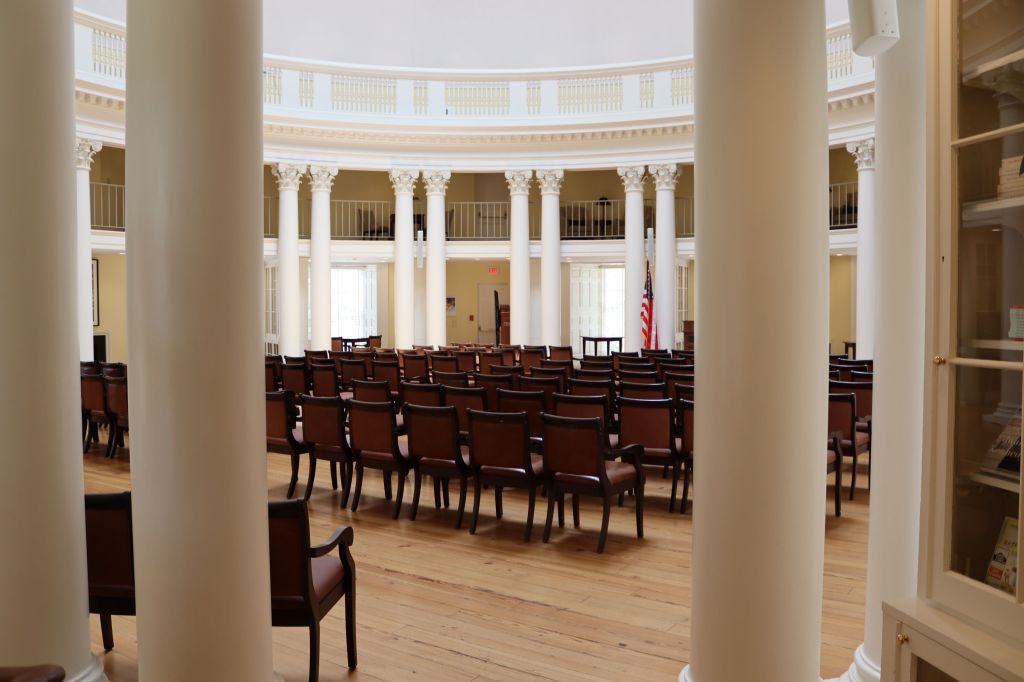
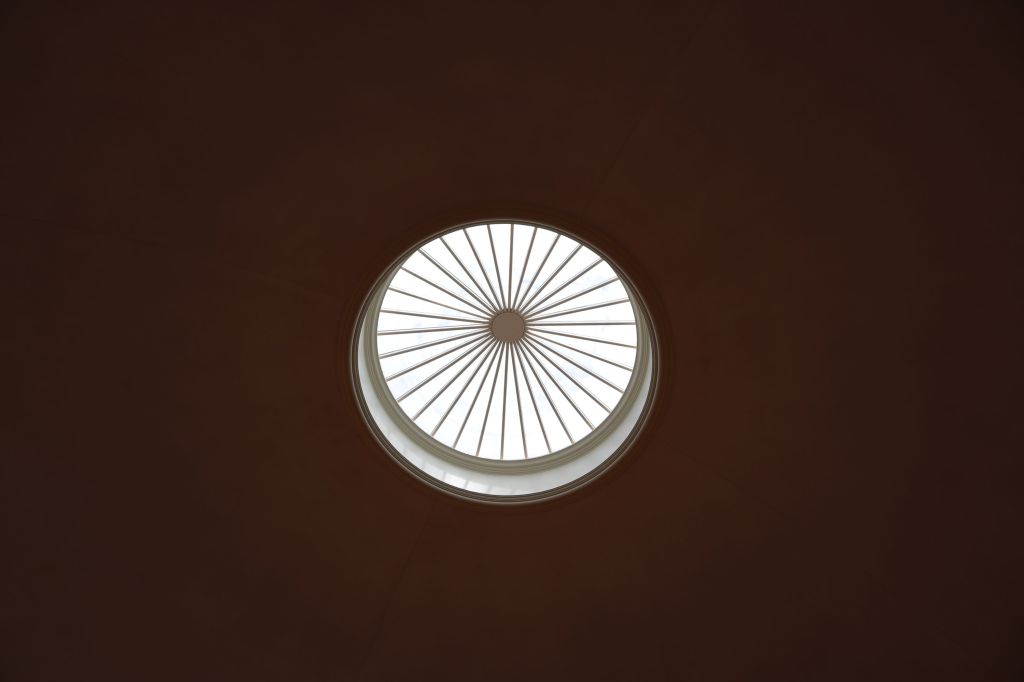


The Dome Room of the Rotunda was originally used for the school library. This version is a 1976 recreation of the original space. Currently, the room is used as a planetarium, lecture room, and book exhibit space.


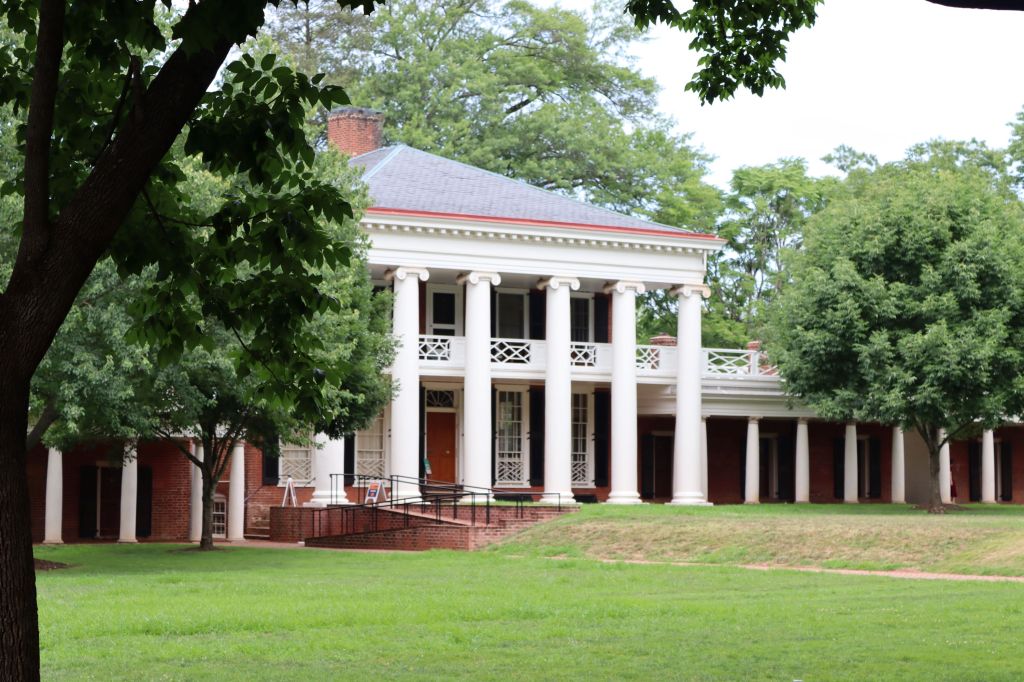


The UVA lawn, extending out from the Rotunda, is lined with buildings originally used to house classrooms and dorms. Some of the rooms are still used to this day as living space by students at the school.
Pavilion VII on the lawn is where the cornerstone of UVA was laid. It was placed in 1817, and Thomas Jefferson, James Madison, and James Monroe were present.
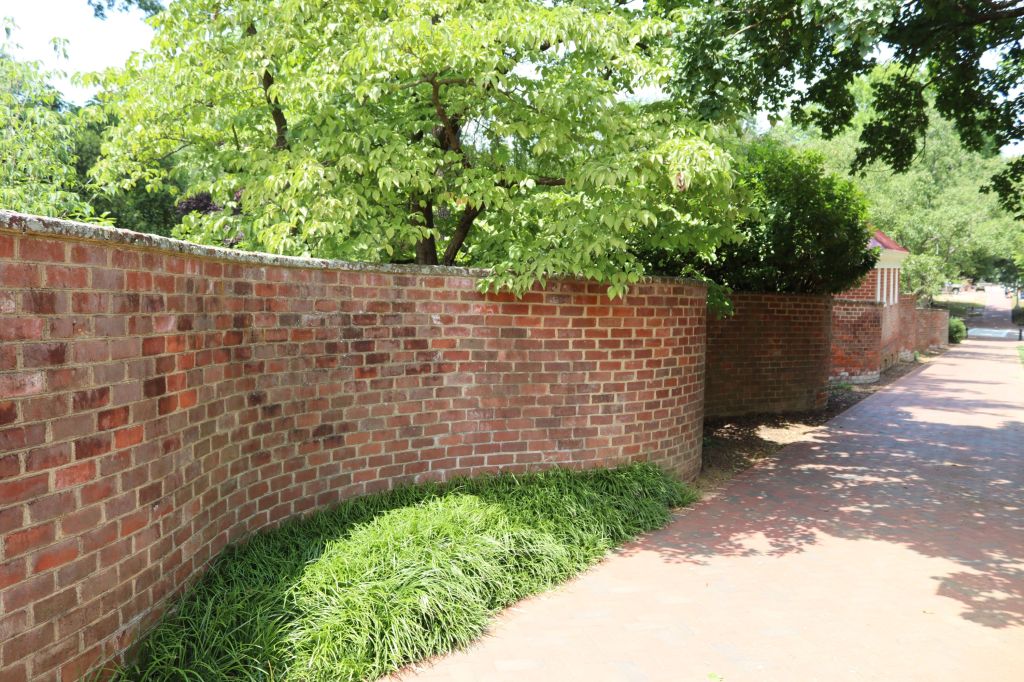


Extending behind each pavilion on the lawn is a garden, originally used as workers for enslaved laborers. The current gardens date to the 1950s and 1960s and were built by the Garden Club of Virginia. The gardens are quite distinctive due to the curved walls.
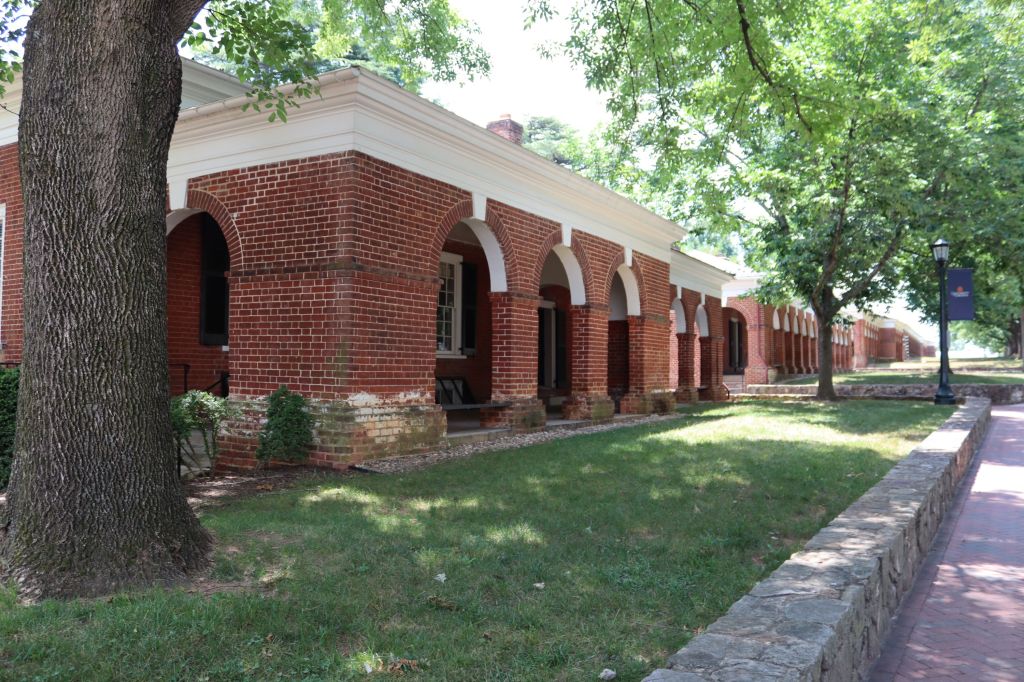

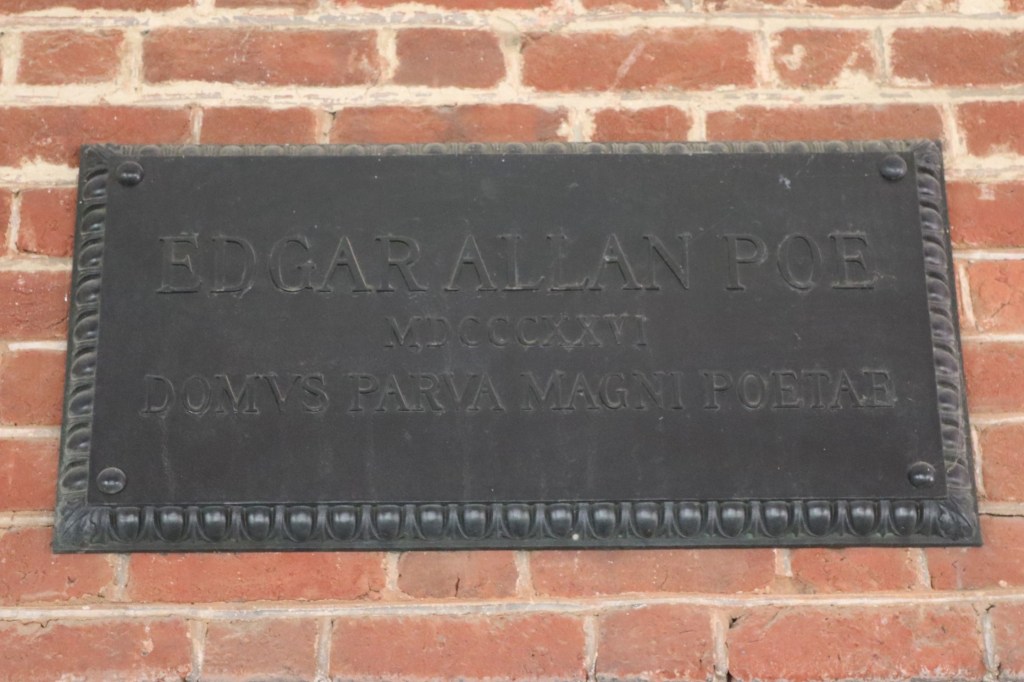

Edgar Allen Poe was a student at UVA in 1826, and stayed in room No. 13. The room is furnished like it was in Poe’s day and can be seen through plexiglass in the door.

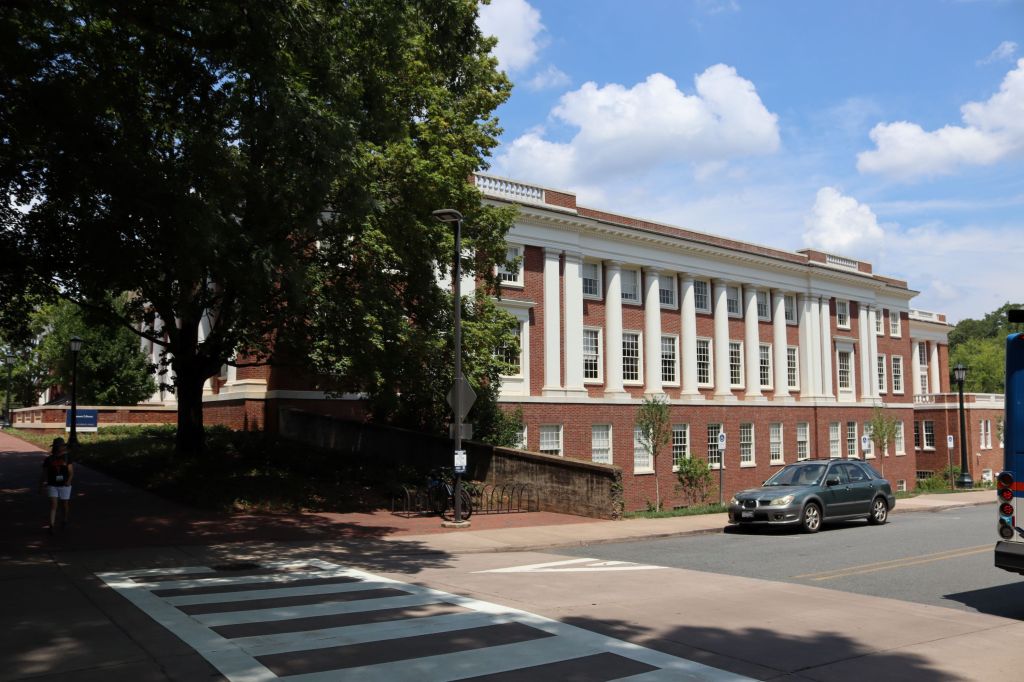


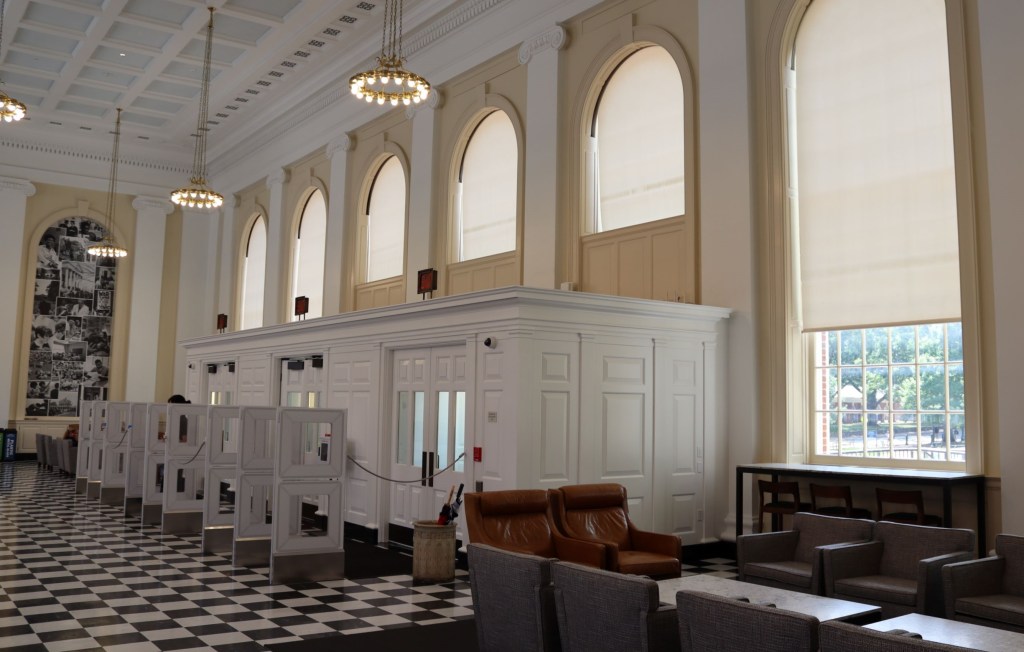
Moving away from the lawn area are many other historic buildings at UVA. Many of there histories can be found in this exhibit, which has been a major help in researching these posts: https://explore.lib.virginia.edu/exhibits/show/architecture-after-jefferson
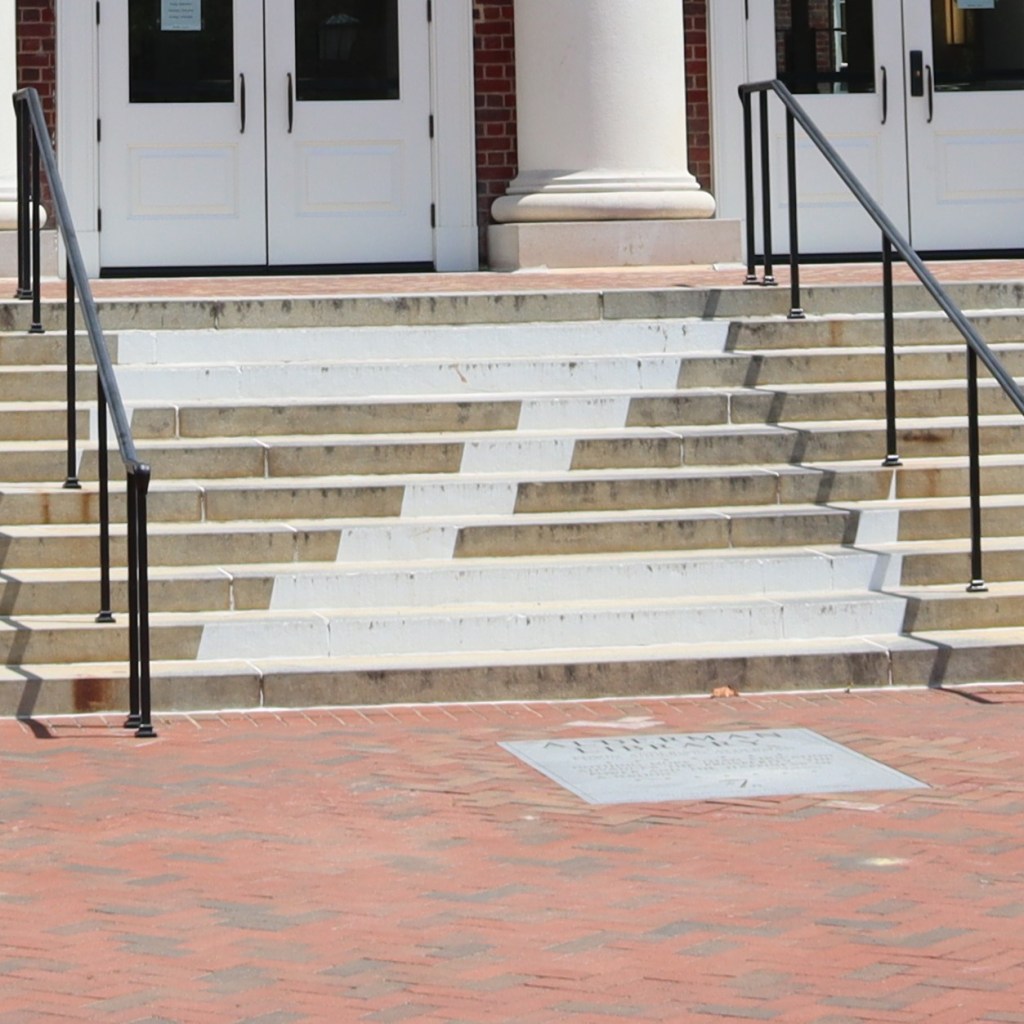
The Edgar Shannon Library (originally named the Alderman Library) was opened in 1938. This year, it opened after a major renovation and refurbishment.

This historic house, named Lewis Mountain, looks down upon UVA and the students of the school, known as “Hoos.” According to some, it was this mountaintop house looking down on the Hoos that inspired Dr. Seuss when creating the Grinch.


The University Chapel of UVA was built in the 1880s, and its Gothic Revival design is very different than its neoclassical surroundings. One of the chapel’s windows was designed by Louis Comfort Tiffany, while the others were created by J. R. Lamb and Sons.
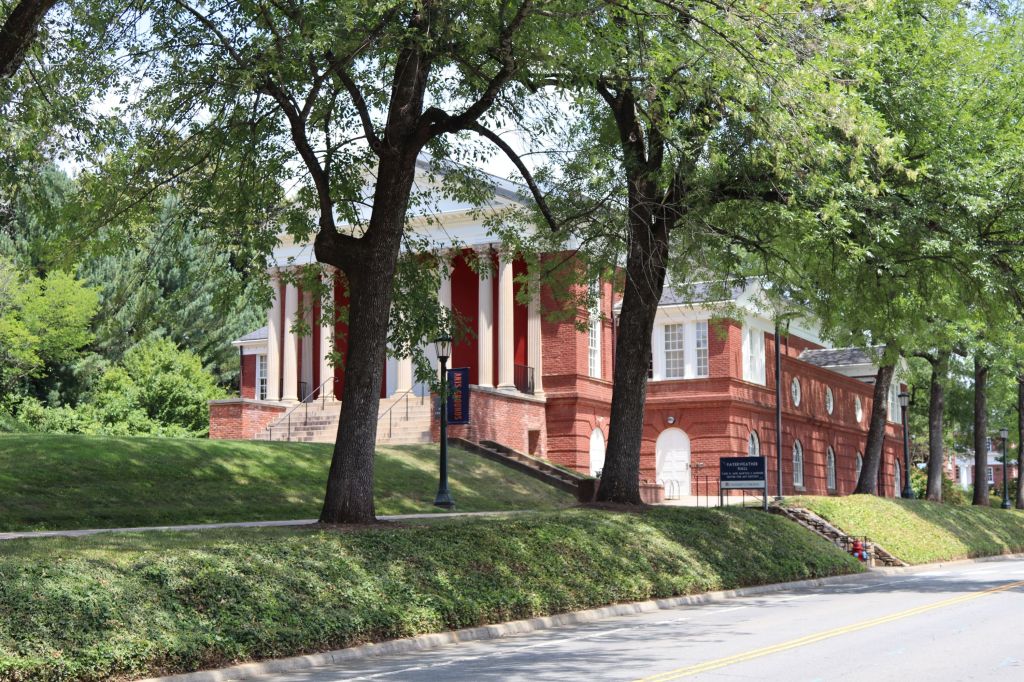


Fayerweather Hall was built from 1892 to 1893, and was the first gymnasium for UVA. It was divided into classroom space in the 1920s.
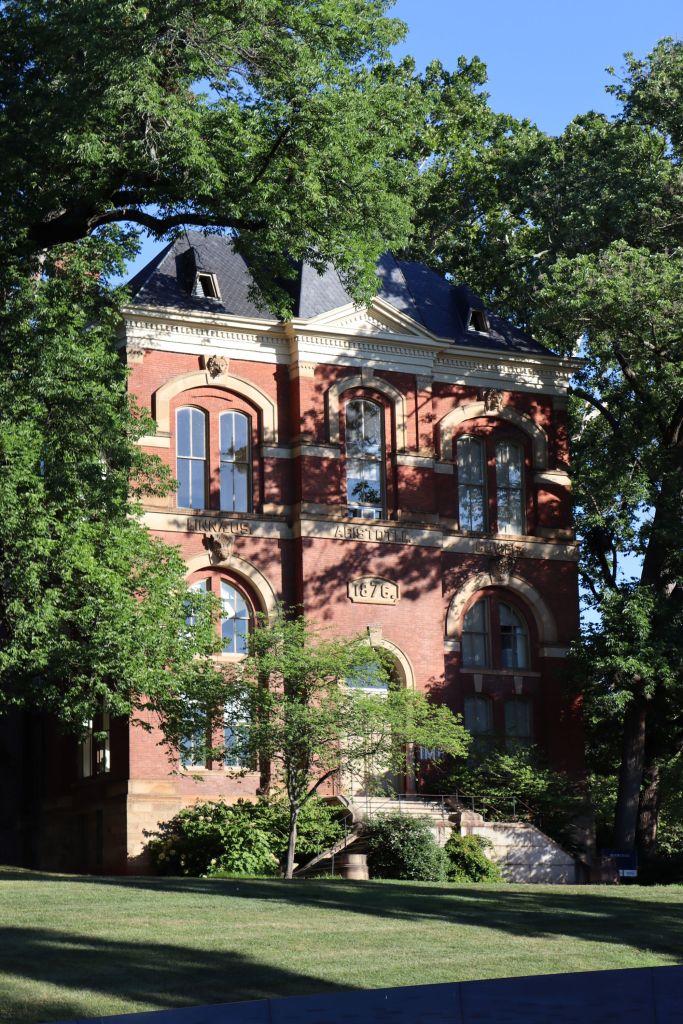

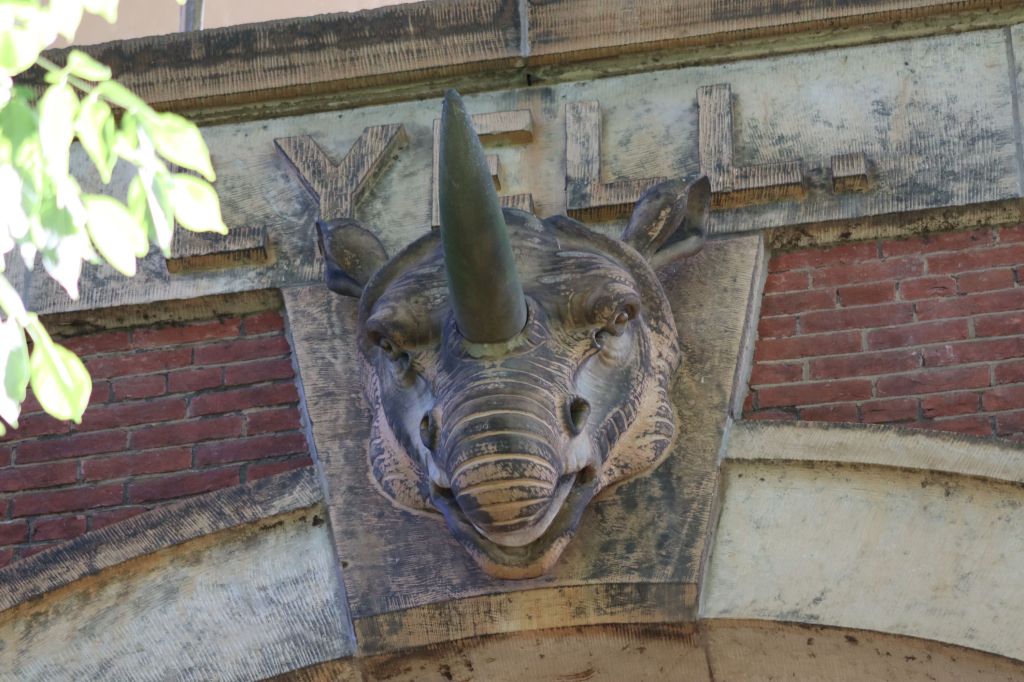


Brooks Hall was built in the 1870s to house a natural history museum. It became classrooms in the 1940s. Its original usage is still reflected on the exterior, which has the names of famous naturalists and carvings of animal heads.


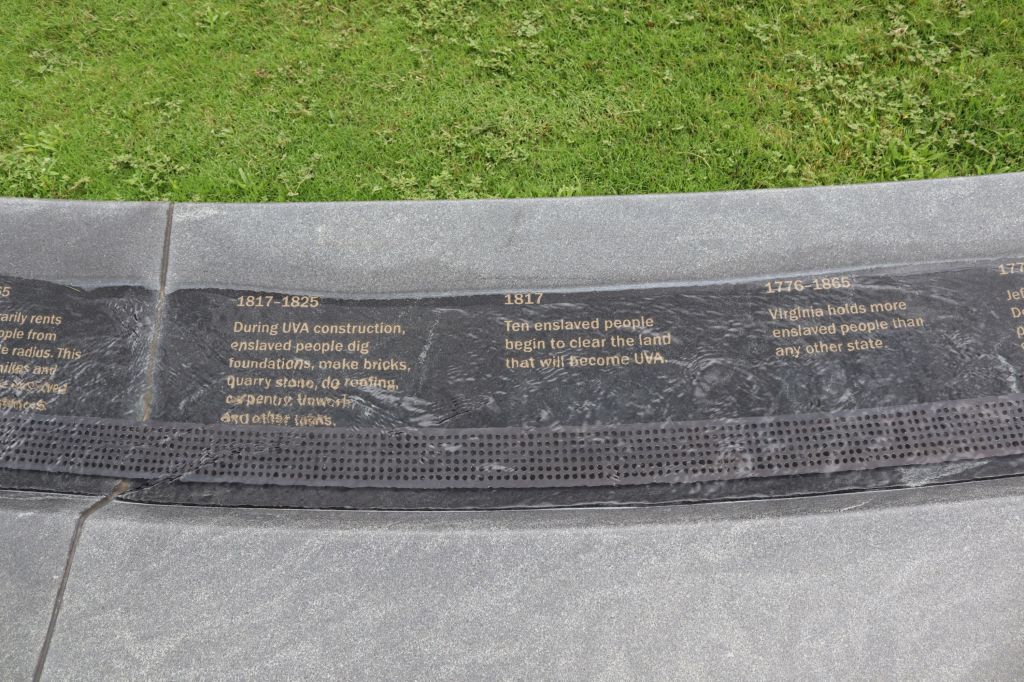
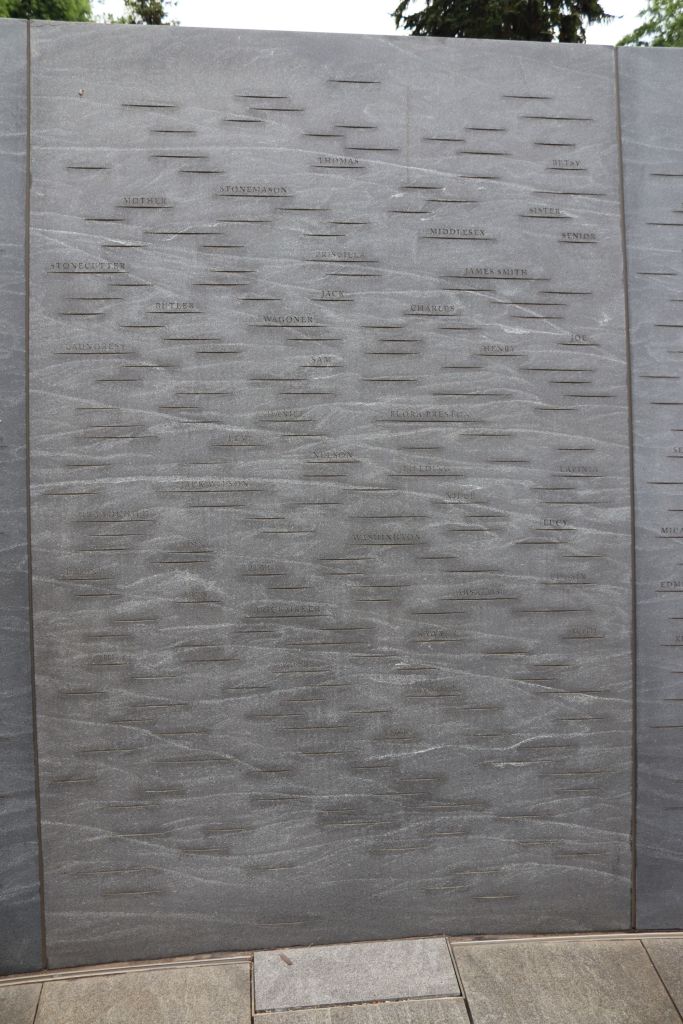
This unique part of the landscape at UVA is the Memorial to Enslaved Laborers. Along with the wall are marks representing the roughly four thousand enslaved men and women who worked at UVA, with names included when known. In the running water is a timeline of slavery in Virginia and at UVA.


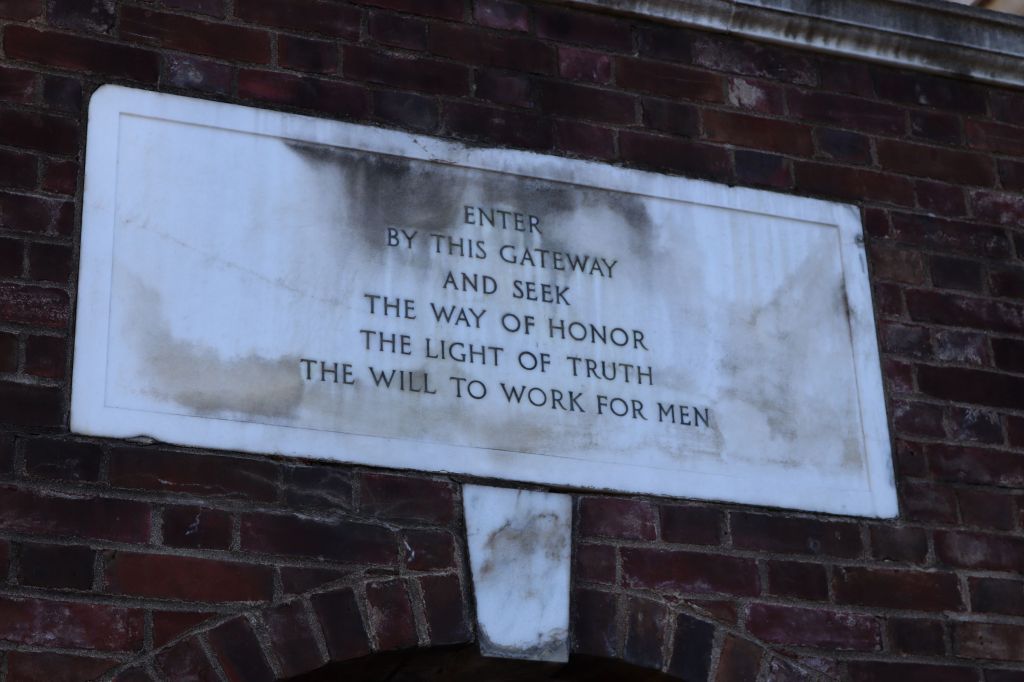
These entrance gates to UVA date to 1914. They are a memorial to Charles H. Senff, a UVA graduate, and were designed by the architect of the Lincoln Memorial, Henry Bacon.


During my trip to UVA, I saw several odd symbols carved in stone or spray painted on walls. After a bit of internet research at home, I found their meaning. Each represents a secret society at UVA. The 7 with an alpha, omega, and infinity sign belongs to the Seven Society, which has unknown origins. The Z is the Z Society, founded in 1892. The last symbol, the IMP, represents the IMP Society, founded in 1902. Of these, the Seven Society is the most secretive.
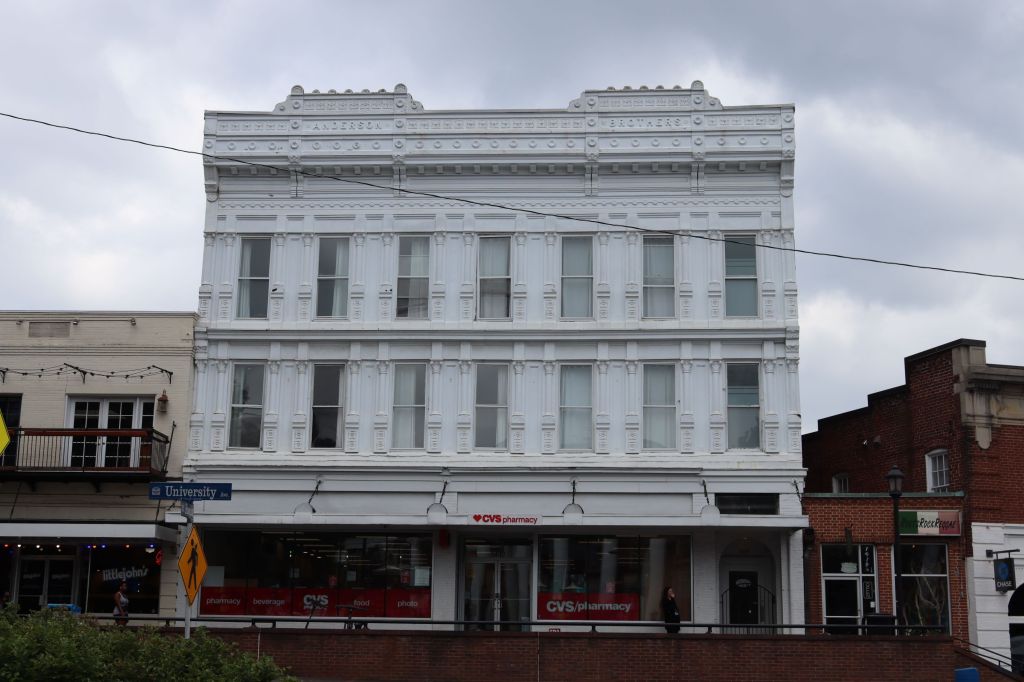


The final stop on my UVA photo tour is just outside of campus. Known as the Corner, this collection of commercial buildings is now a hub of student activity. The Anderson Brothers building was built in 1891, while the Chancellor’s Drugstore building dates to 1914.
Thank you for viewing all of the photos! I had a great time on this trip, and I think I got many fantastic photos of the school. The next site I visited was Jefferson’s Poplar Forest. Stay tuned for photos from my visit there.
Interested in subscribing to my blog? Type your email below to be notified about new posts.
 Andrew J. Bramlett
4 thoughts on “Trip Photos – University of Virginia”
Comments are closed.